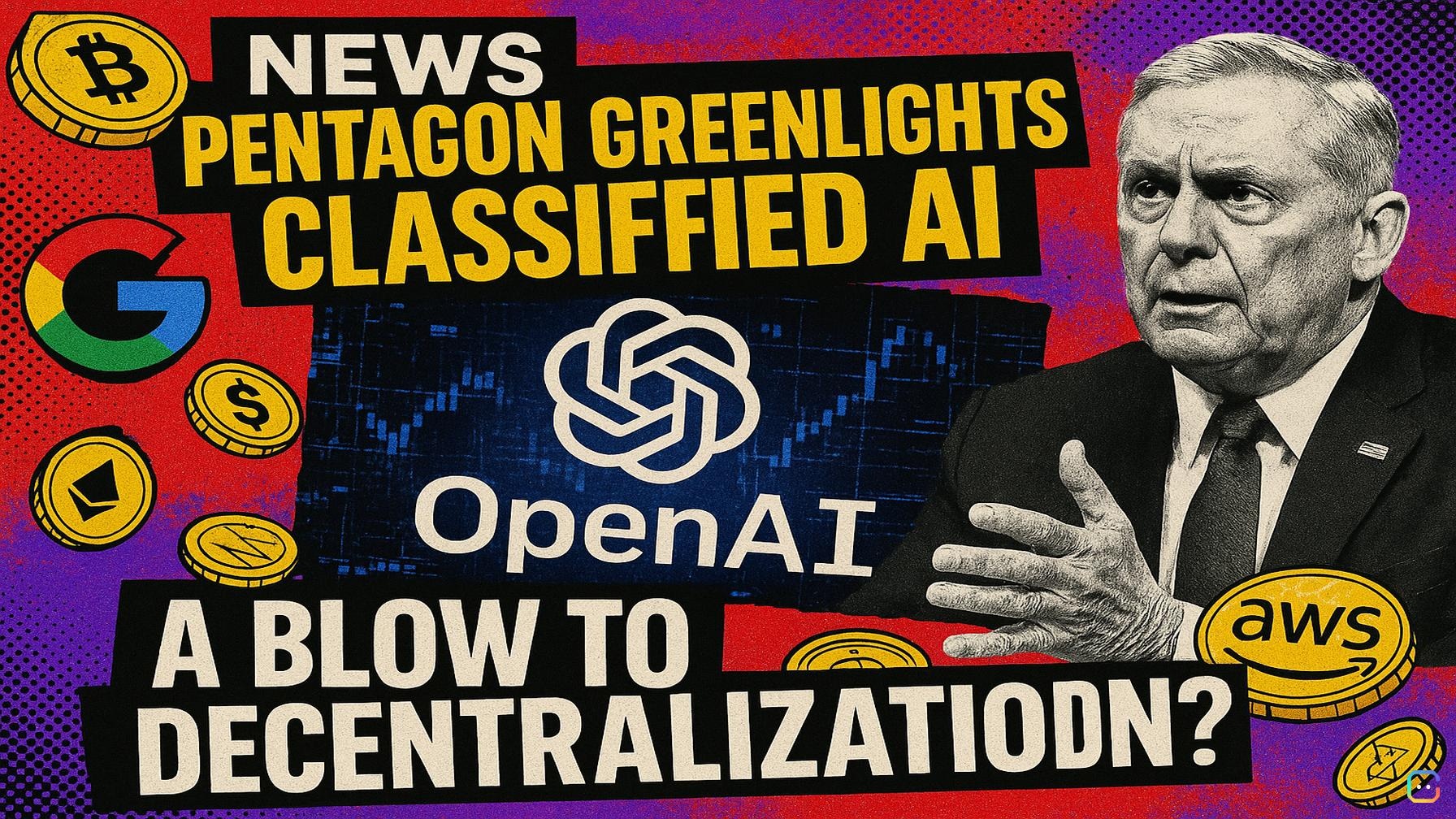
The Pentagon just green-lit a major expansion of AI inside classified military systems — and it tapped some of the biggest names in tech to do it.
What happened
The U.S. Department of Defense announced Friday that it has signed agreements with eight technology firms to deploy advanced artificial intelligence on classified networks. The companies certified to operate on these systems are SpaceX, OpenAI, Google, Nvidia, Reflection, Microsoft, Oracle, and Amazon Web Services (AWS).
Security levels and safeguards
The approved systems will run at Impact Level 6 (IL6) and Impact Level 7 (IL7), DoD security designations for classified data. IL6 covers secret-level information, while IL7 applies to even more sensitive national security systems. According to the Pentagon, the AI tools must operate on tightly controlled infrastructure with strict access controls, network isolation, and personnel clearance requirements.
Why the move matters
The Pentagon framed the deals as a leap toward making the U.S. military an “AI-first” fighting force, designed to help warfighters maintain decision superiority across domains. The agreements extend existing federal engagement with these vendors — many of which already supply cloud computing, data infrastructure, and AI services to the government. The announcement did not disclose contract values.
GenAI.mil and scale of use
These arrangements will support GenAI.mil, the Pentagon’s internal AI platform launched in December with Google Gemini. The DoD says more than 1.3 million personnel have used GenAI.mil to generate “tens of millions” of prompts and deploy hundreds of thousands of AI agents within five months. The system is intended for data analysis, situational awareness, and decision-making and is designed to rely on multiple AI providers rather than a single vendor.
Official responses
OpenAI told Decrypt it supports the goal that people defending the U.S. “should have the best tools in the world.” AWS said it plans to expand support for military operations as the Pentagon moves forward with AI deployment on classified networks; AWS spokesperson Tim Barrett emphasized the company’s decade-long commitment to providing technology for U.S. defense partners.
Concerns and scrutiny
Civil liberties and tech-safety groups warn the rollout raises unresolved questions about oversight, transparency, and risk in high-stakes military AI. Greg Nojeim, director of the Center for Democracy and Technology’s Security and Surveillance Project, told Decrypt: “How will DoD use the AI that it deploys, and how will it ensure that such use does not result in errant decisions with lethal impact? Will it use AI to further supercharge surveillance, including surveillance of Americans?” He said the announcement underscores the need for more transparency about DoD AI use and oversight.
Context and recent moves
The new agreements are part of a broader acceleration of AI adoption across defense programs. In March 2025 the Pentagon tapped Scale AI to build the Thunderforge planning system, later struck deals to integrate ChatGPT and xAI’s Grok into different projects in 2025, and made a classified AI deal with Google earlier. There have also been reports of the NSA deploying Anthropic’s Claude Mythos on classified networks amid a dispute with that company.
Budget and policy backdrop
In its 2026 budget request the DoD asked for $961.6 billion total, including $33.7 billion for science and technology and autonomous systems — allocations that would underwrite continued AI integration across the department. The Pentagon framed this push in politically charged language, citing directives “as mandated by President Trump and Secretary Hegseth” to strengthen the military’s AI capabilities.
What this means for crypto and the wider tech ecosystem
For crypto and decentralization-minded readers, the deal highlights the growing centrality of large cloud and AI providers in national security infrastructure — and the stakes of who controls sensitive models and datasets. It also raises questions about secure computation, data custody, and whether decentralized tools might play a role in future classified workflows or oversight mechanisms.
Responses pending
SpaceX, Nvidia, Microsoft, and Google did not immediately respond to Decrypt’s request for comment. Editor’s note: this story was updated after publication to add comments.
Read more AI-generated news on: undefined/news