Today's Cryptocurrency Prices by Market Caps
The global cryptocurrency market cap today i $2.32T
Market Cap
$2.32T
24h Trading Volume
$68.21B
BTC Dominance
56.61%
|
#
|
Name
|
Price
|
1h %
|
24h %
|
7d %
|
Market Cap
|
Volume (24h)
|
Chart (7d) |
|---|---|---|---|---|---|---|---|---|
|
|
—
|
|||||||
|
No cryptocurrencies found Try adjusting your search query |
||||||||
Latest Crypto News
View All News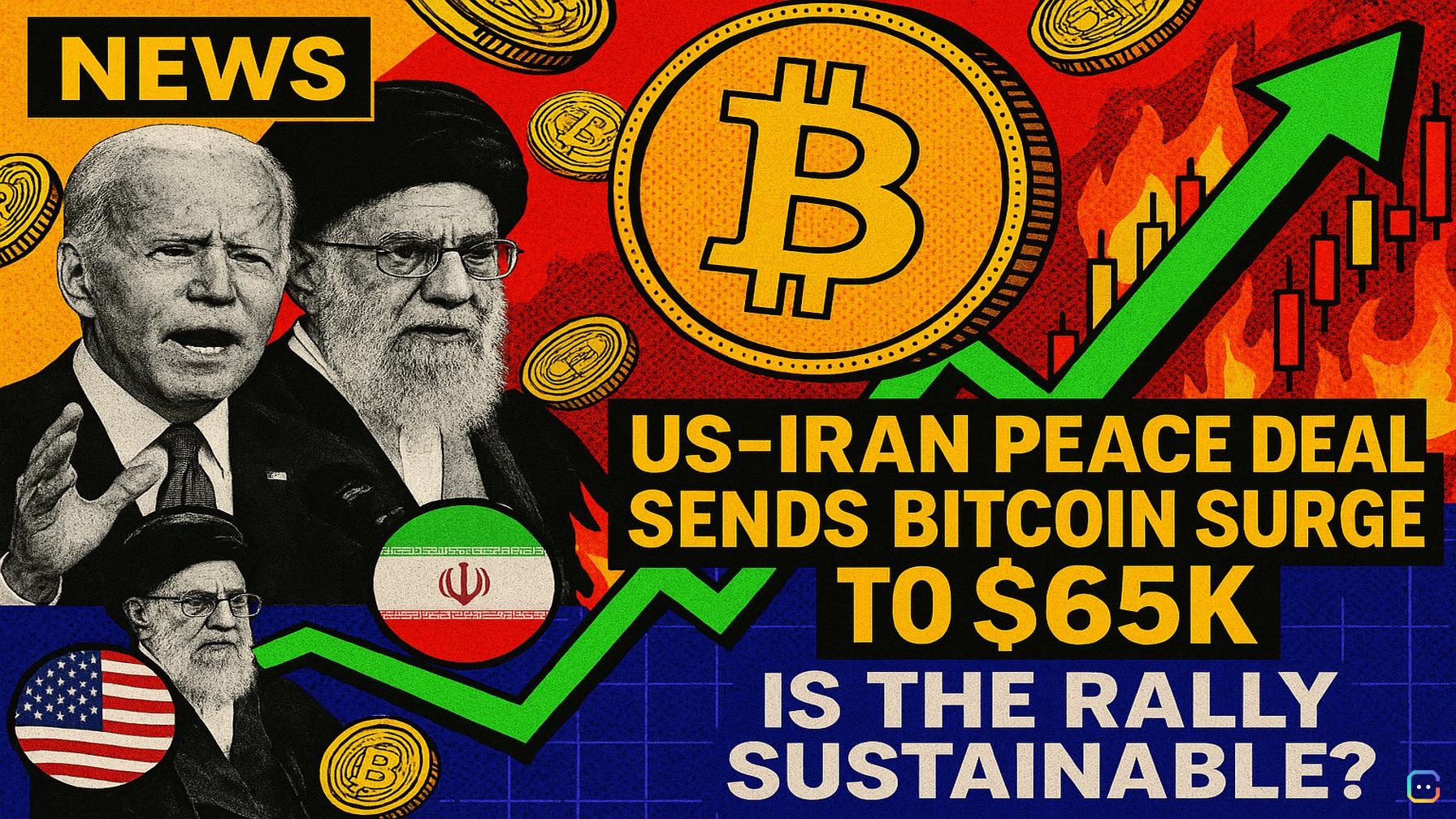
US-Iran Peace Deal Sends Bitcoin Surge to $65K — Is the Rally Sustainable?
Headline: US-Iran Peace Deal Sparks Bitcoin Bounce — But Is the Rally Sustainable? Bitcoin (BTC) is showing signs of recovery after President Trump announced a US-Iran peace deal scheduled to be signed Friday, June 19, 2026. The agreement calls for the complete, toll-free reopening of the Strait of Hormuz and the immediate removal of the US naval blockade. Pakistani Prime Minister Shehbaz Sharif hailed the pact as ensuring the “permanent termination of military operations on all fronts,” including in Lebanon. Iran has reportedly committed to never develop a nuclear weapon. Why it matters for Bitcoin BTC’s recent weakness was closely tied to geopolitical turmoil and macroeconomic shocks. After reaching an all-time high of $126,080 in October 2025, Bitcoin began a prolonged pullback. The situation worsened in February when the US-Iran conflict erupted: the closure of the Strait of Hormuz choked global energy supply, sending crude prices higher and pushing CPI readings above expectations. That inflation surprise knocked Bitcoin down further — BTC briefly dipped below $60,000 on June 6, 2026. Market reaction to the deal Following the peace announcement, Bitcoin reclaimed the $65,000 level. Crude oil prices have already started sliding and could continue to ease in the coming days as shipping routes reopen and supply concerns abate. What could happen next - Bull case: If oil prices remain subdued and the peace deal holds, headline inflation is likely to cool. That could reduce pressure on the Federal Reserve, potentially paving the way for interest-rate cuts. Lower rates generally make borrowing cheaper and can boost appetite for risk assets — a scenario that could support another leg up for Bitcoin. - Bear case: The deal’s implementation risks, lingering regional instability, or a slower-than-expected disinflationary effect would limit central-bank easing and could cap BTC gains. Macroeconomic or on-chain-specific shocks could also reverse recent recoveries. Bottom line The US-Iran agreement removes a major geopolitical risk that helped push BTC sharply lower earlier this year, and markets are responding. But whether this peace deal is enough to sustain a durable Bitcoin rally depends on how quickly oil and inflation normalize and whether the Fed shifts its policy path. For now, BTC’s rebound to $65,000 is encouraging, but significant risks remain. Read more AI-generated news on: undefined/news
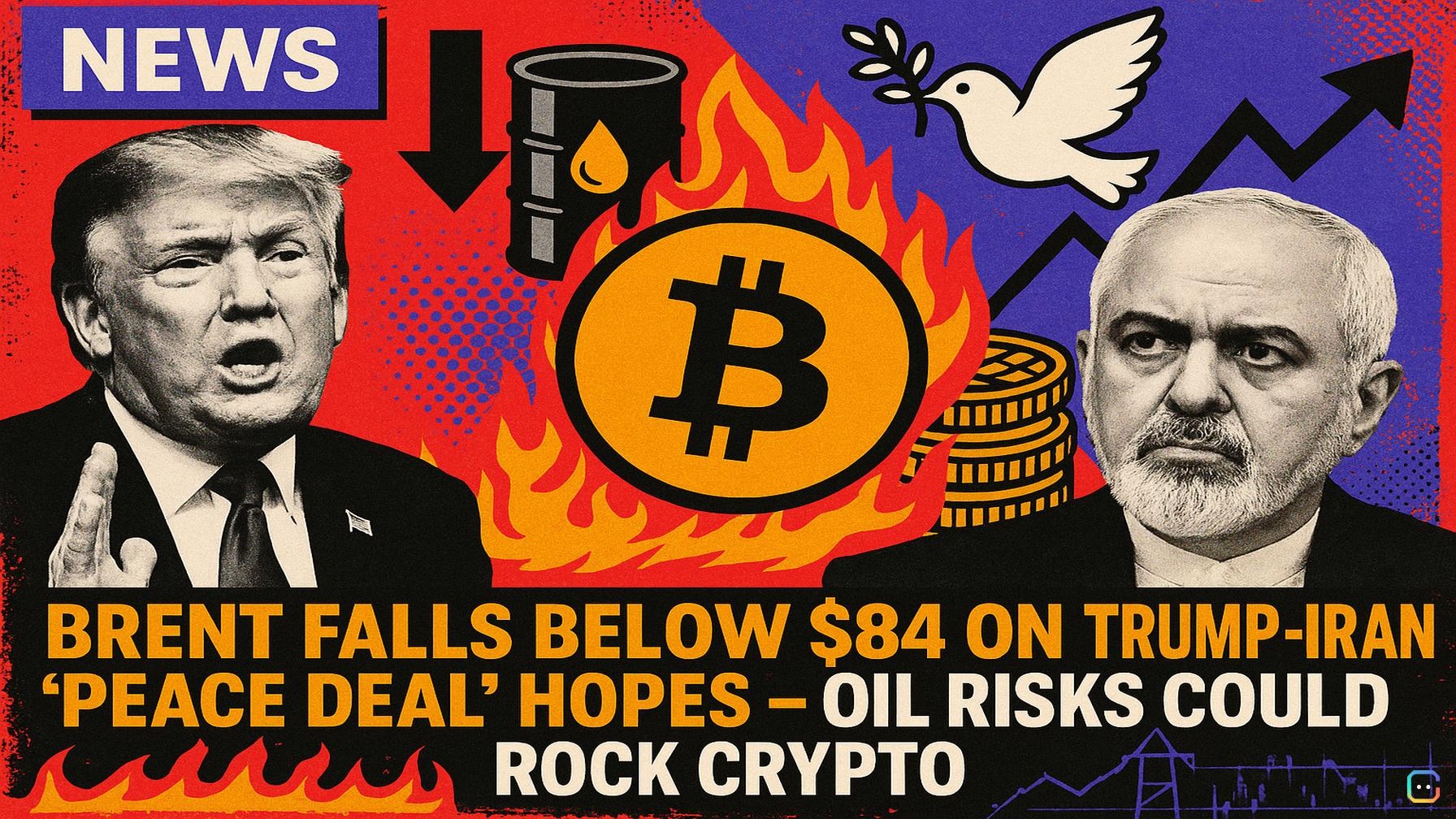
Brent Falls Below $84 on Trump-Iran 'Peace Deal' Hopes - Oil Risks Could Rock Crypto
Brent crude plunged below $84 a barrel on Monday after former President Trump declared a US‑Iran peace deal “now complete” over the weekend, marking the lowest price since early March. The move extended a selloff that began Friday, when optimism about a deal sent Brent from roughly $93 to about $87.50 — and then another roughly 4% lower Monday in Asia‑Pacific trade. Markets are trading on headlines, not barrels. Iranian Foreign Minister Seyed Abbas Araghchi said a memorandum of understanding “has never been closer,” and a senior Trump administration official put the odds of a signed deal at about 80%. US Energy Secretary Chris Wright added that ship traffic through the Strait of Hormuz was “rising very meaningfully,” giving traders another reason to sell. Still, analysts caution that physical supply gains will take time to materialize: Iran confirmed a 60‑day negotiating window for a final agreement on nuclear issues and sanctions relief, so the risk to shipments through the Strait remains unresolved for now. On the ground, the recovery in flows looks limited. UBS analysts led by Henri Patricot said there is “little evidence” of a near‑term improvement in vessel traffic or energy flows and called Gulf crude loadings “extremely low.” IG analyst Tony Sycamore summed up market sentiment: “Hard to see crude falling much further from here in the near term.” In short: prices are being driven by optimism, not by a sudden return of physical barrels. The disruption has been large. The Strait of Hormuz shock removed roughly 14 million barrels per day (bpd) from global markets since early March — cutting exports from Iraq, Saudi Arabia, the UAE and Kuwait all at once. Producers and partners patched some of that hole: about 5 million bpd was rerouted through alternative pipelines, the US military facilitated roughly 2 million bpd via covert tanker movements, and the International Energy Agency released emergency stocks at about 2.5 million bpd. Even so, inventories remain near multi‑year lows. Major banks and consultancies say the structural picture is unchanged and recovery will be gradual. Barclays kept its 2026 Brent forecast at $100/bbl and warned of upside risks, saying inventory trends point to a 6–8 million bpd deficit and that even a full reopening today would start from inventories about 20 million barrels below recent tight levels. JPMorgan likewise expects Brent to stay over $100 for the rest of 2026, citing time needed for restocking and infrastructure repairs. Rystad Energy estimated the crisis has removed roughly 1 billion barrels from the market so far. Even under an optimistic timeline — a June peace deal — Rystad sees a phased reopening only from mid‑July, with about 85% of lost volumes back by October and the remainder, largely from mature Iraqi and Kuwaiti fields, recovering into January 2027. Under that constructive scenario, cumulative supply losses could approach 2 billion barrels by year‑end. Bottom line for markets and crypto investors: headline relief has knocked oil prices down for now, but inventories, damaged infrastructure and phased restarts mean the supply-side squeeze isn’t fixed. That lingering energy risk can sustain inflationary pressures and volatility across risk assets — including crypto — and keep mining and energy‑sensitive projects on watch until physical flows actually recover. Read more AI-generated news on: undefined/news

Quantum-proof your Ethereum account today for ~$0.07 — wallet-level protection, no hard fork
Headline: Ethereum researcher says wallets can add post‑quantum account protection today — for about $0.07 A lead researcher on the Ethereum Foundation’s privacy project Kohaku says accounts on Ethereum can begin preparing for a post‑quantum future now — without waiting for a hard fork. In a June 2026 post on X, Nico wrote: “Ethereum can already start preparing accounts for a post quantum world, without waiting for a hard fork.” He added that, at today’s gas prices, the cost to add protection would be roughly $0.07 per account. What Nico proposes is account‑level protection, not a chainwide protocol change. That means wallets or smart contract account implementations could adopt quantum‑resistant signature schemes through existing smart‑contract logic while core Ethereum developers continue work on longer‑term protocol upgrades. The technical idea: SPHINCS‑, an EVM‑optimized family of stateless post‑quantum signatures Nico’s Ethereum Research post outlines SPHINCS‑, a family of EVM‑optimized, stateless, hash‑based signature schemes derived from SPHINCS+ and newer compact hash‑based constructions. The goal is to keep on‑chain verification costs practical without needing a new precompile or changes to Ethereum’s execution rules. Key technical numbers from the post: - A Solidity verifier is already able to validate a post‑quantum‑style signature on Ethereum at realistic cost. - One optimized variant, called C13, verifies in about 127,000 gas and uses a 3,704‑byte signature. - The work includes a Lean 4 formal proof checked with Verity. Why this matters Ethereum (and Bitcoin) currently rely on ECDSA‑style signatures, which cryptographers warn could become breakable by sufficiently powerful future quantum computers. Hash‑based signatures like SPHINCS‑ are designed to resist those quantum attacks. By enabling post‑quantum verification in smart contracts today, high‑value accounts could adopt defenses before any network‑level upgrade is completed. How this fits into the broader roadmap The proposal aligns with ongoing Ethereum roadmap themes: Vitalik Buterin and others have discussed account abstraction — which lets wallets define how transactions are approved and paid — and account abstraction is already part of short‑term privacy work (FOCIL and keyed nonces). The Ethereum Foundation has also signaled a renewed focus on long‑term survival, security, privacy, openness and censorship resistance, with post‑quantum security and formal verification listed as future goals. Limits and next steps Nico cautions the design has limits: it uses non‑standard settings, involves bounded signature counts, and there are differences between Keccak‑based implementations and NIST‑aligned variants. The design has undergone an initial review with Fable and more audits are planned — the review is not a final sign‑off. Next work items include additional reviews, safer wallet UX flows, clearer cost models, and better hardware support. A practical path forward Because many funds still sit in legacy addresses, a wallet‑based route could let custodians and users test post‑quantum protection on high‑value accounts now, while broader protocol changes are evaluated and vetted. Nico’s proposal doesn’t imply an imminent quantum attack, nor does it replace later network‑level work — but it does show that account‑level defenses can move from research into practical trials today at a low cost per account. Read more about the research and follow upcoming audits as the project moves toward wider testing. Read more AI-generated news on: undefined/news
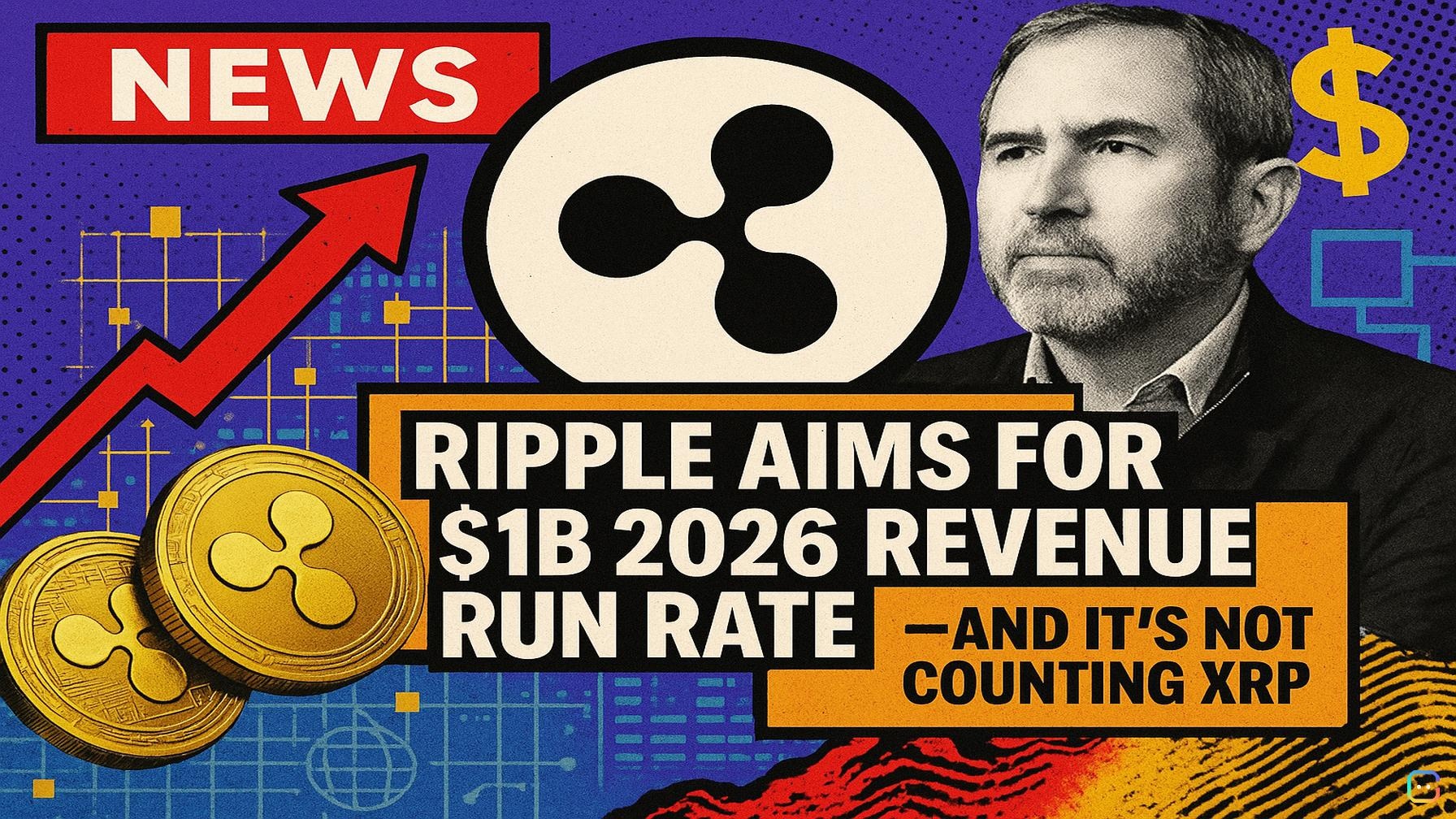
Ripple Aims for $1B 2026 Revenue Run Rate — and It’s Not Counting XRP
Ripple sets sights on $1B revenue run rate for 2026 — and it’s not counting XRP Ripple CEO Brad Garlinghouse has put a concrete figure on the company's next big milestone: a $1 billion revenue run rate by the end of 2026 — explicitly excluding XRP holdings from that total. The announcement, shared in posts picked up by CoinMarketCap and crypto accounts on X, underscores Ripple’s push to be seen as a payments and fintech infrastructure provider whose revenue derives from products and services rather than token sales or balance-sheet crypto. Why the caveat matters Ripple has long faced scrutiny over how its business and XRP holdings interact. By separating operating revenue from token inventory, Garlinghouse is framing Ripple as a platform that makes money from customers — banks, corporates and institutions — through services like custody, treasury management and liquidity, rather than from fluctuations in XRP’s market price. Expansion beyond payments The company’s roadmap extends past cross-border payments. In 2025 Ripple agreed to buy prime broker Hidden Road for $1.25 billion, bringing credit, clearing and prime brokerage services into its stack. Ripple says Hidden Road clears roughly $3 trillion annually — a capability that dovetails with institutional offerings and bolsters Ripple USD (RLUSD), the firm’s enterprise-focused stablecoin. Ripple has been positioning RLUSD for settlement and collateral use, and recent reports show the stablecoin being integrated into new payment tools, including services for AI agents and machine payments on the XRP Ledger. Product focus and target customers Ripple’s materials emphasize regulated custody, treasury management and liquidity services aimed at banks and corporate treasuries that need faster settlement and tighter account control — not retail trading features. The $1 billion run rate target framed without XRP holdings is intended to give financial customers and partners a clearer metric to evaluate Ripple’s core business independent of crypto market volatility. Market signals XRP market action is moving on its own pace: crypto.news data showed XRP around $1.15 on June 14, while XRP-linked ETF products logged inflows for a fifth straight week. Data for the week ended June 12 showed about $10.68 million flowed into XRP products, even as Bitcoin and Ethereum funds experienced outflows. Those flows highlight that investor appetite for XRP can diverge from Ripple’s operating performance — which is precisely why Garlinghouse emphasized excluding XRP from the revenue target. Regulatory backdrop Ripple’s growth plans are unfolding alongside a busy U.S. policy calendar. The CLARITY Act cleared the Senate Banking Committee in a 15-9 vote on May 14, 2026, but still requires further consolidation (including text from the Agriculture Committee) before a full Senate vote. Garlinghouse has urged clearer rules for digital assets, arguing banks need legal certainty to deepen their crypto services. A robust regulatory framework could bolster Ripple’s ambitions for payments, custody, liquidity, treasury tools, stablecoins and token settlement in the U.S. Automation and AI payments Ripple is also building automated payment rails. As reported on June 13, the company released an XRPL AI Starter Kit that enables AI agents to use XRP and RLUSD for payments via the x402 protocol with limited human involvement. The kit lets software agents create wallets, check balances, track transactions and execute payments — a step toward machine-to-machine economic activity on the XRP Ledger. Bottom line: Ripple is staking its future on institutional revenue streams and infrastructure growth, while drawing a clearer line between its operating business and the market dynamics of XRP. Read more AI-generated news on: undefined/news
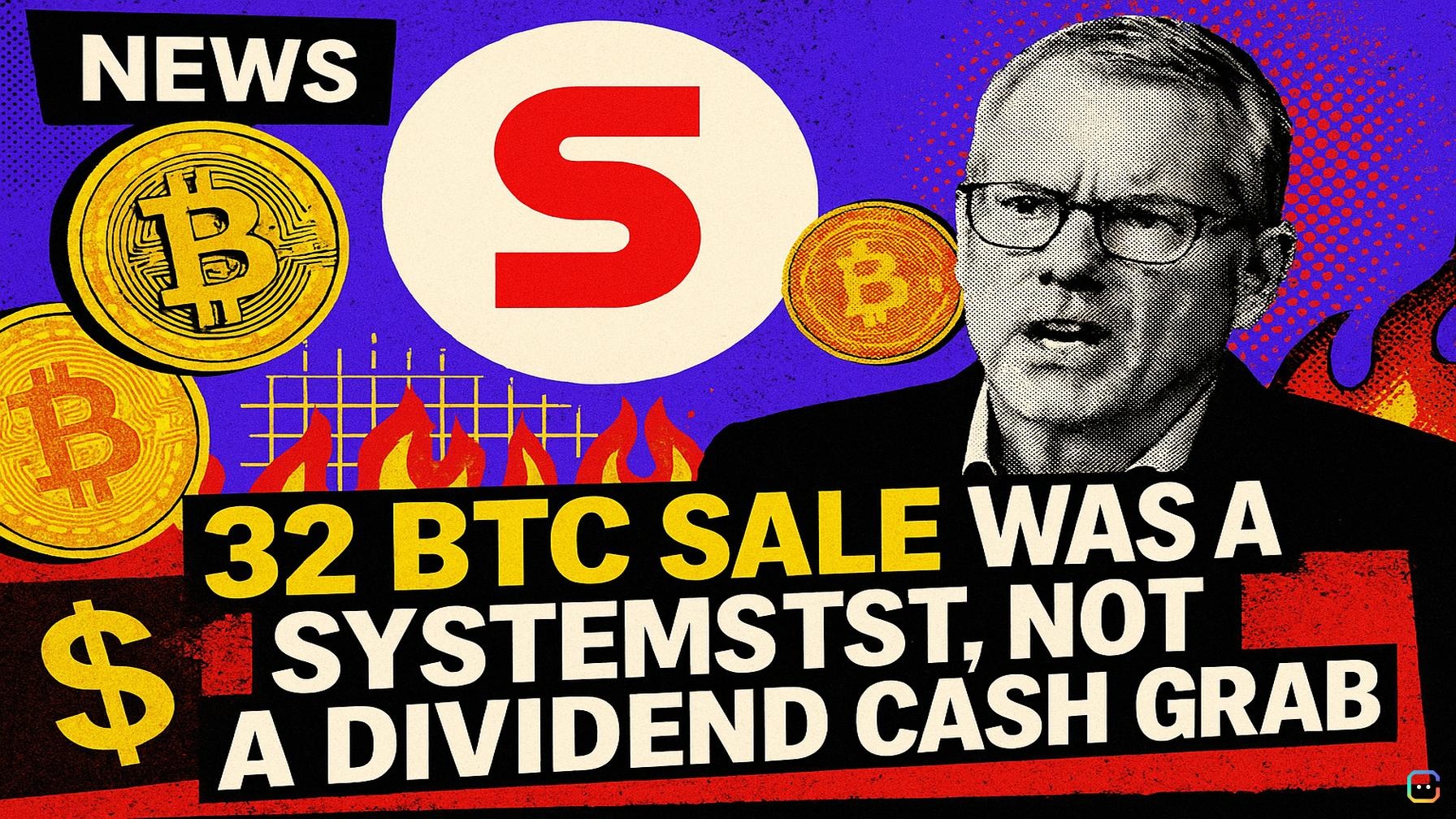
Strategy CEO: 32 BTC Sale Was a Systems Test, Not a Dividend Cash Grab
Strategy CEO Phong Le says a recent 32 BTC sale was a deliberate systems test — not a scramble for cash to cover dividends. In a June 13 interview, Le told reporters the May 26–31 sale, disclosed in an SEC filing, was meant to “inoculate the market” and validate the company’s internal process for selling Bitcoin. Strategy disposed of 32 BTC for roughly $2.5 million, at an average price of $77,135 per BTC. The SEC filing had noted the proceeds would fund preferred stock distributions, a disclosure that prompted some investors to worry the firm might need to sell more Bitcoin to meet cash obligations. Le pushed back on that interpretation. He said Strategy did not sell Bitcoin because it lacked cash for dividends and that the company still has other financing options — including equity and preferred-stock tools — to support its capital structure. He also pointed out a tax benefit: the sale generated losses that could offset related taxes in future periods. According to Le, the main goals were process validation, reducing market shock around potential sales, and keeping the company ready to make small, strategic sales if those would benefit common shareholders. He emphasized Strategy will use “math over ideology” when choosing between selling Bitcoin and issuing shares: if a sale increases Bitcoin-per-share for common holders, they’ll consider it; if issuing equity is more accretive, they’ll pursue that route. On the risk of a forced sale, Le framed the most realistic stress scenario as an “edge case” tied to roughly $3.5 billion of preferred obligations maturing in 2028. If Bitcoin plunged and Strategy’s share price stayed depressed, selling Bitcoin could become necessary to satisfy those claims — but refinancing or converting the obligations into equity are alternative levers the company could pull. Shortly after the small May sale, Strategy executed a much larger buy: it purchased 1,550 BTC for about $101.3 million between June 1 and June 7, which the company says lifted its total holdings to 845,256 BTC and boosted its U.S. dollar reserve to $1 billion. The debate around Strategy’s capital alignment has resurfaced broader questions about how to measure the firm’s Bitcoin exposure. Michael Saylor has pushed for clarity: Bitcoin Per Share measures growth for common equity, while Common Equity Bitcoin Exposure BPS (CEBE BPS) is a more conservative metric that accounts for debt and preferred-stock claims. As Strategy’s model increasingly incorporates debt, preferred stock and dividend costs, the gap between Bitcoin Per Share and CEBE BPS can widen — a key detail for investors weighing true economic exposure. Bottom line: Strategy frames the 32 BTC sale as a tactical rehearsal and balance-sheet management exercise, not an emergency liquidity move — and the company says multiple tools remain available should market conditions deteriorate. Read more AI-generated news on: undefined/news
SEC Clears T. Rowe Price’s Active Multi‑Crypto ETF for NYSE Arca Listing
The U.S. Securities and Exchange Commission has cleared the way for T. Rowe Price to list a multi-asset crypto ETF on NYSE Arca. In an order dated June 12, the SEC approved NYSE Arca’s proposal to list and trade shares of the T. Rowe Price Active Crypto ETF under NYSE Arca Rule 8.201-E for commodity-based trust shares. What the product is - A single, listed vehicle that can hold multiple cryptocurrencies rather than being limited to Bitcoin or Ethereum. - The fund seeks long-term capital growth by investing in a basket of eligible crypto assets selected by the sponsor. - It will use the FTSE Crypto US Listed Index as a benchmark, but it is actively managed — the sponsor intends to pursue an active strategy aimed at outperforming the Index. Portfolio scope and flexibility - Under normal conditions the ETF is expected to hold between five and fifteen eligible crypto assets, though the filing allows for temporary deviations above or below that range to respond to market conditions. - The fund may also hold cash, cash equivalents and some stablecoins for operational purposes. Eligible assets The filing lists a broad set of potential holdings, including: Bitcoin, Ethereum, Solana, XRP, Cardano, Avalanche, Litecoin, Polkadot, Dogecoin, Chainlink, Stellar, Hedera, Bitcoin Cash, Shiba Inu and Sui. Compliance and market safeguards - Because the ETF is actively managed, NYSE Arca’s approval includes enhanced controls: firewall rules for sponsor staff and related broker-dealer affiliates and provisions to halt trading if portfolio holdings are not simultaneously shared with all market participants. Why this matters - The approval widens regulated on‑ramp options for investors seeking exposure to large-cap altcoins and even selected meme tokens inside a single product. Many prior U.S. crypto ETF launches focused narrowly on spot Bitcoin and spot Ethereum; this fund is broader by design. - The listing approval clears the exchange rule necessary for launch, but actual trading still depends on T. Rowe Price completing its launch process. Market context - The decision comes amid a flurry of ETF activity: other issuers, including BlackRock, are advancing new crypto-related filings (e.g., a Form 8‑A for an iShares Bitcoin Premium Income ETF). - Investor flows are mixed: recent data showed XRP exchange-traded products attracting about $10.68 million in the week ended June 12, while Bitcoin and Ethereum products saw outflows. U.S. spot Bitcoin ETFs also experienced a run of net outflows earlier in May and June. Bottom line The SEC’s approval gives investors a regulated, actively managed path to diversified crypto exposure — including major altcoins and meme coins — inside a single ETF. Trading start dates and operational details will be announced when T. Rowe Price completes its launch steps. Read more AI-generated news on: undefined/news