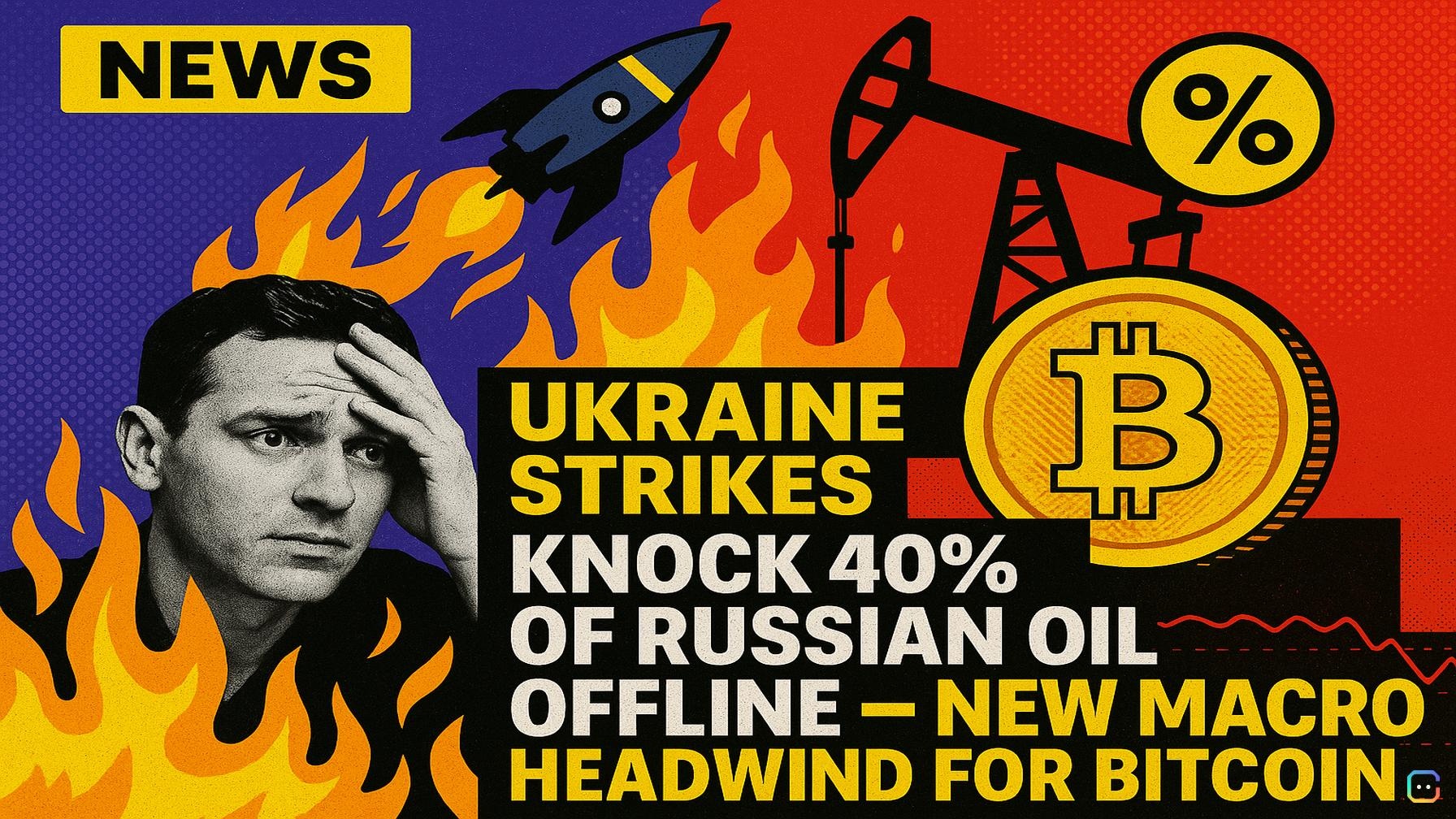
Headline: Ukraine strikes complicate U.S. plan to calm oil markets — a fresh macro headwind for Bitcoin
The fallout from the Iran war had already put oil markets front and center — and now Ukraine’s strikes on Russian export infrastructure have thrown another wrench into efforts to steady prices, raising fresh macro risks for financial markets including cryptocurrencies.
What happened
- Facing disruptions through the Strait of Hormuz and surging crude prices, the Trump administration moved to temporarily lift sanctions on some Russian oil to offset supply shortfalls from the Middle East.
- That stopgap appeared to blunt the shock — until this week, when Ukraine launched drone strikes on ports and refineries in Russia’s Leningrad region. Observers called the strikes “the most serious threat” to Russia’s oil exports since the 2022 invasion.
- The result: roughly 40% of Russia’s oil export capacity is now reported offline. Michael Kern, editor at Oilprice.com, called the situation “a logistics problem first — and a supply problem second,” noting that getting oil to buyers has become as difficult as producing it.
Why it matters for markets and crypto
- The combination of Middle East turmoil, de facto closure of the Strait of Hormuz, LNG and oil production outages, plus the Russian disruption, keeps upward pressure on energy prices and increases the chance that high inflation proves sticky.
- Sticky energy prices can push central banks toward tighter policy. Traders are already positioning for a potential Fed rate increase in the near term: flows in the options market tied to overnight rates suggest some are wagering on a hike within the next two weeks, per Bloomberg.
- For risk assets — equities, tech, and crypto — that’s a headwind. Higher rates and drained liquidity tend to weigh on risk appetite. Bitcoin’s recent run of resilience may therefore face pressure, with the $65,000–$75,000 band singled out as vulnerable to a downside break.
Market snapshot (at press time)
- Bitcoin: trading near $68,500, down nearly 2% over 24 hours (CoinDesk).
- WTI crude: after tumbling nearly 10% to $83.95 on Monday, it has bounced back to roughly $93.50 per barrel.
- Brent crude: trading back above $100 per barrel.
Bottom line
What looked like a short-term fix to steady energy markets may prove fragile. With supply routes disrupted in both the Middle East and Russia, oil prices could stay elevated longer than expected — and that raises the odds of tighter monetary policy. For crypto investors, that translates into greater macro risk and a test of Bitcoin’s ability to hold recent gains.
Read more AI-generated news on: undefined/news