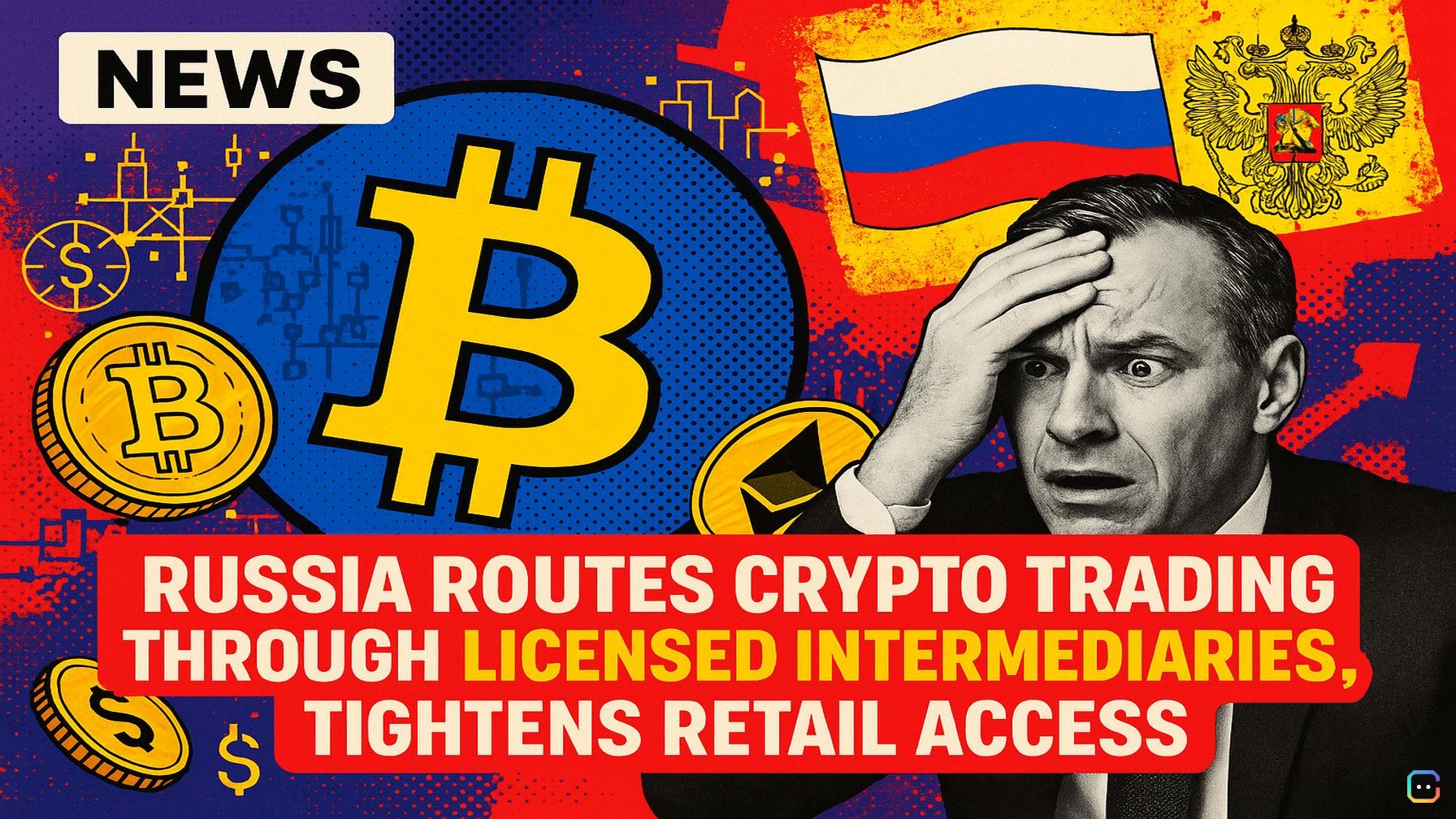
Headline: Russia moves to route crypto trading through licensed intermediaries, tightens retail access
The Russian government has approved a package of draft laws that would formally channel domestic cryptocurrency trading through regulated intermediaries and significantly tighten retail participation.
According to the Finance Ministry, the framework makes licensed intermediaries — such as exchanges and custodial service providers — the required on-ramps for crypto trading inside Russia. The package also amends several existing laws and the administrative offenses code, introduces a new licensing regime, and creates administrative penalties aimed at deterring unlicensed activity.
Key points
- Licensed intermediaries: Entities involved in crypto operations (exchanges, custodians, etc.) would need to obtain licenses under the new regulatory regime. Banks and brokers would be permitted to participate if they meet specified prudential requirements.
- Retail restrictions: Retail investors would face tighter controls. They would be allowed to buy only the most liquid digital currencies as defined by the Bank of Russia, must pass a qualification test to trade, and would be capped at purchases of 300,000 rubles per year per intermediary.
- Qualified investors: The regime expands access for qualified investors, who would have broader trading rights than retail participants.
- Cross-border purchases: Russian traders could still buy crypto via foreign accounts, but such transactions would need to be reported to tax authorities.
- Enforcement: New administrative liability for violations of exchange activity rules aims to crack down on unlicensed operations.
Context and implications
This move is part of a broader push by Russian regulators to bring more of the digital-asset space under formal oversight. By steering domestic trading through licensed intermediaries and constraining retail access, the government appears to be prioritizing market stability, investor protection, and tighter control over capital flows and compliance.
Separately, reports earlier this month said the Finance Ministry is preparing a separate bill to regulate digital assets pegged to fiat currencies (stablecoins), signaling further regulatory focus on crypto’s evolving product set.
What’s next
These are draft laws that now proceed through the legislative process. Market participants will be watching for drafting details, licensing timelines, and how strictly the limits (including the ruble cap and the liquidity criteria) are defined and enforced.
Read more AI-generated news on: undefined/news