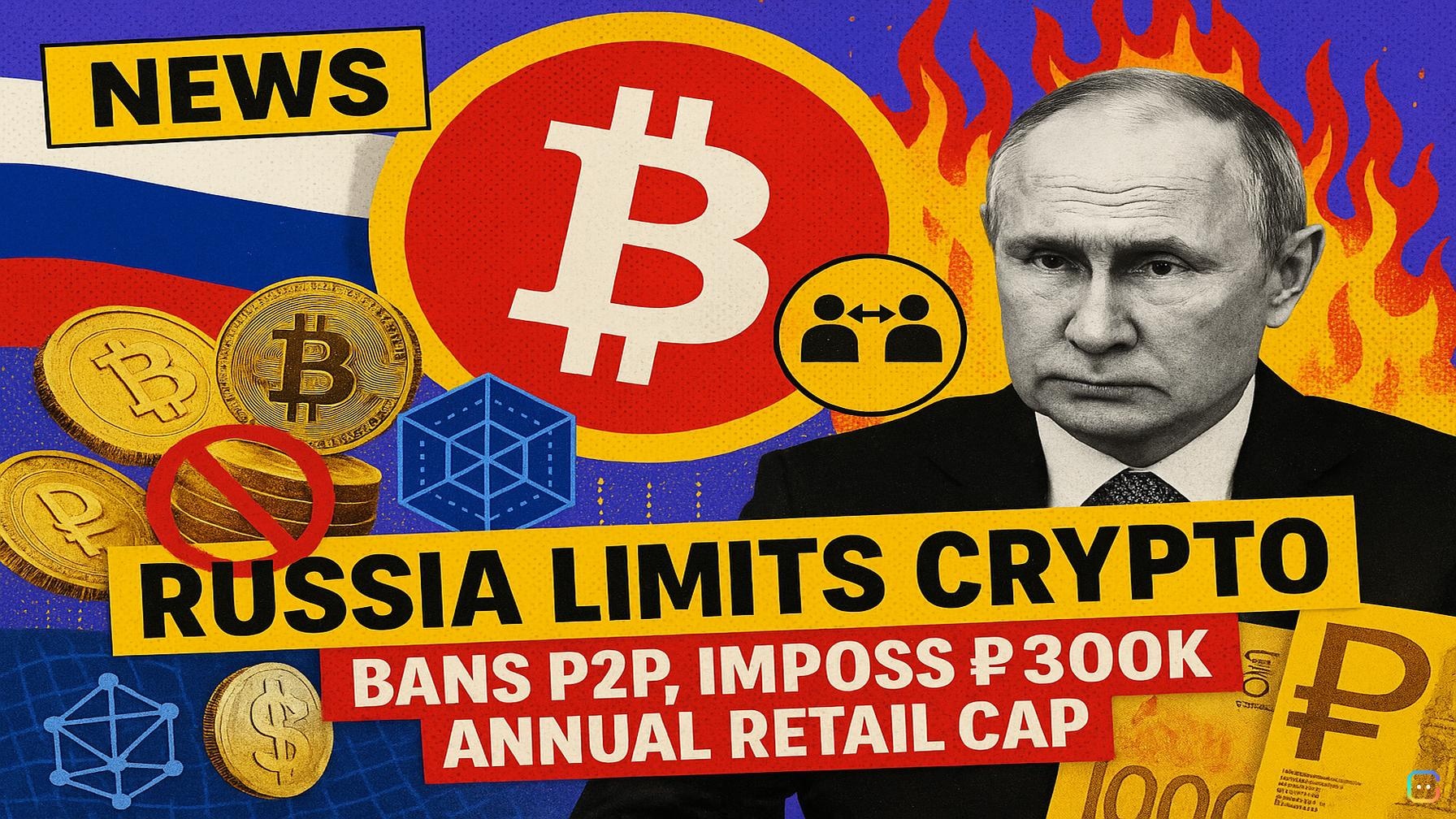
Russia has moved to tightly control crypto trading, approving a package of laws that makes trading through regulated intermediaries the only legal path for most residents — a shift that will sharply curtail peer‑to‑peer and offshore access for retail users.
What the new rules do
- Trading without a licensed intermediary is banned. The Ministry of Finance said the measures legalize circulation of digital currencies and digital rights only when intermediated by regulated providers.
- Retail “non‑qualified” investors face an annual purchase cap of roughly ₽300,000 (~$3,700) per broker or intermediary, and may buy only a short list of high‑liquidity coins pre‑approved by the central bank.
- Banks will be barred from processing payments to unlicensed foreign crypto platforms.
- Qualified investors keep broad access and no purchase caps, but they must pass suitability tests and trade through licensed platforms.
- Residents may still purchase crypto abroad using foreign accounts and transfer foreign currency bought through Russian intermediaries, but they will be required to notify the Federal Tax Service of any foreign transactions.
Timing and enforcement
- The government is building a fuller legal framework through mid‑2026, with stronger liability and penalties for unlicensed intermediaries phased in into 2027 (per prior reporting by Bitcoinist).
- The measures mark an explicit effort to pull flows onshore so they can be taxed, monitored for AML, and steered away from destabilizing the ruble — while keeping crypto banned for domestic payments and promoting the central bank’s digital ruble as the preferred “safe” alternative.
Immediate effects for users and exchanges
- The new package effectively shuts down much of Russia’s gray P2P and OTC market and will cut off most citizens from unlicensed offshore exchanges such as Bybit and OKX.
- Retail traders should expect loss of access to long‑tail altcoins, more fragmented liquidity (as flows redirect to “friendly” jurisdictions and licensed venues), heavier surveillance, and increased friction for cross‑border transfers.
- Offshore exchanges and platforms that continue to serve Russian clients without licenses face rising legal risk as enforcement tightens.
Global implications
- Reduced Russian flow on major offshore venues could shave volumes in certain pairs, but the larger implication is structural: if other large economies follow an “intermediaries‑only” model, the open P2P era of crypto trading may give way to a banking‑style, highly regulated market dominated by licensed gatekeepers.
Bottom line
Moscow’s new rules are a clear attempt to reassert state control over crypto activity — limiting mass retail participation, consolidating trading inside regulated channels, and funneling responsibility for compliance and taxation to licensed intermediaries. For Russian retail users, the era of easy access to offshore exchanges and broad token inventories looks to be coming to an end.
Read more AI-generated news on: undefined/news