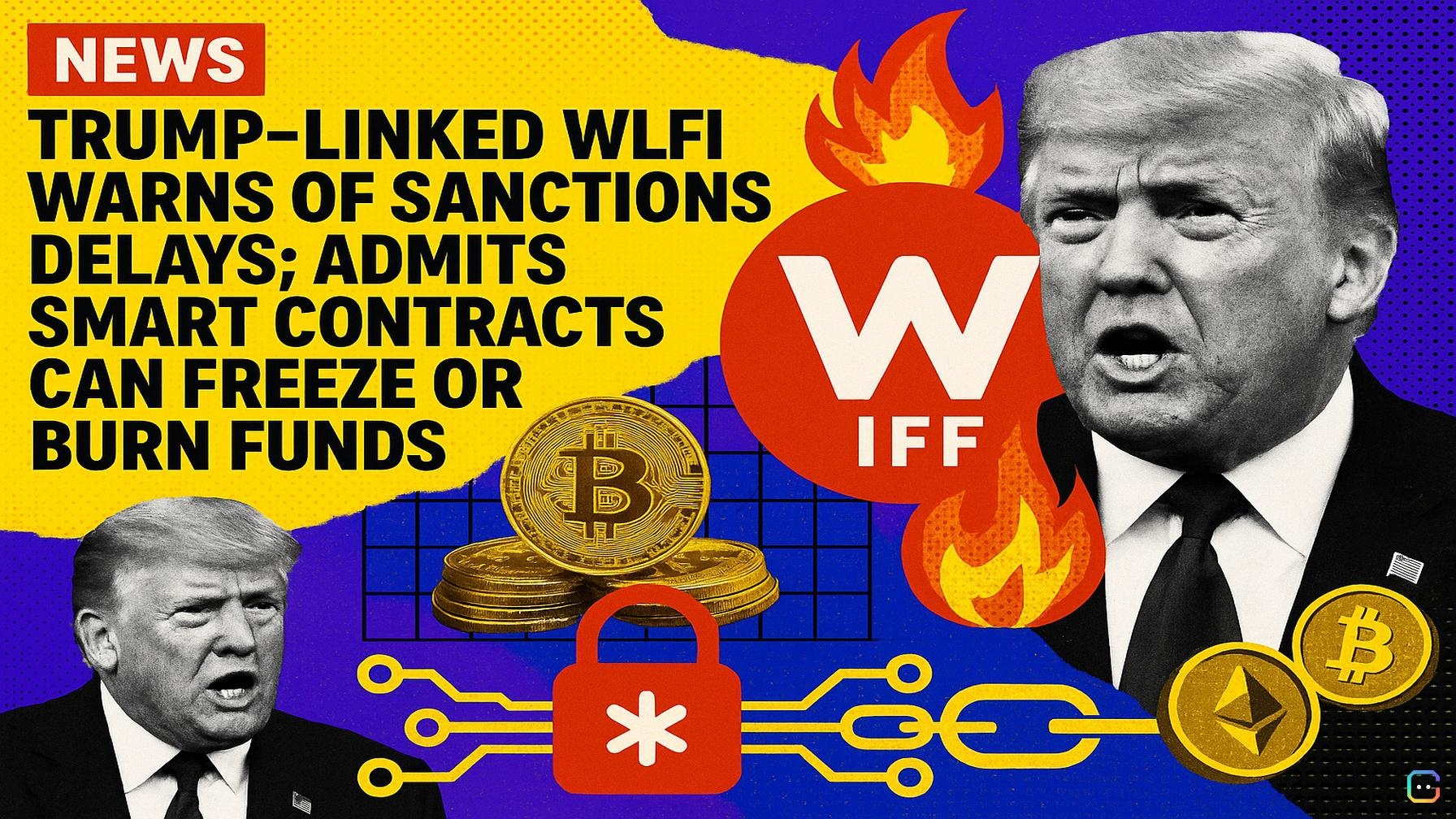
World Liberty Financial (WLFI), the crypto venture tied to former President Donald Trump, is facing renewed scrutiny after the project warned users this week that transfers involving sanctioned people, organizations or wallet addresses may be delayed, restricted or rejected.
Senators Elizabeth Warren and Jack Reed had already raised alarms about WLFI last year, asking US authorities to investigate whether addresses connected to Russia, North Korea and the blacklisted privacy mixer Tornado Cash slipped past the project’s presale screenings. WLFI pushed back at the time, saying it enforces strict anti-money-laundering (AML) and identity checks and even turned away millions during its presale.
The compliance notice posted on X on June 3, 2026 makes that posture explicit: WLFI says it maintains risk-based sanctions controls “to support applicable legal and regulatory obligations” and will continue reviewing transactions for sanctions-related risks. The company urged users to verify that their funds and addresses have no link to prohibited activity before initiating transfers.
What has intensified skepticism in the crypto community is WLFI’s own admission that its smart contracts include hard-coded powers to freeze, restrict or burn wallet balances. Those unilateral enforcement capabilities — which anchor investor Justin Sun reportedly flagged internally — sit uneasily with the DeFi branding WLFI has used, because they introduce centralized control over assets on otherwise public blockchain rails.
The notice coincided with broader US enforcement actions. On the same day, the Treasury Department’s Office of Foreign Assets Control sanctioned several Iranian crypto platforms, including Nobitex, Wallex, Bitpin and Ramzinex, and named associated executives. Treasury Secretary Bessent accused Nobitex of processing transactions tied to Iran’s Islamic Revolutionary Guard Corps and moving funds even after US military operations disrupted communications in the country, saying the move showed state actors are using digital assets to evade sanctions.
WLFI’s stance highlights a growing tension in crypto: projects that tout decentralization are increasingly adopting centralized compliance tools to satisfy legal obligations. Whether those trade-offs will satisfy regulators — or crypto users who value permissionless systems — remains an open question.
Read more AI-generated news on: undefined/news