Today's Cryptocurrency Prices by Market Caps
The global cryptocurrency market cap today i $2.35T
Market Cap
$2.35T
24h Trading Volume
$141.09B
BTC Dominance
56.47%
|
#
|
Name
|
Price
|
1h %
|
24h %
|
7d %
|
Market Cap
|
Volume (24h)
|
Chart (7d) |
|---|---|---|---|---|---|---|---|---|
|
|
—
|
|||||||
|
No cryptocurrencies found Try adjusting your search query |
||||||||
Latest Crypto News
View All News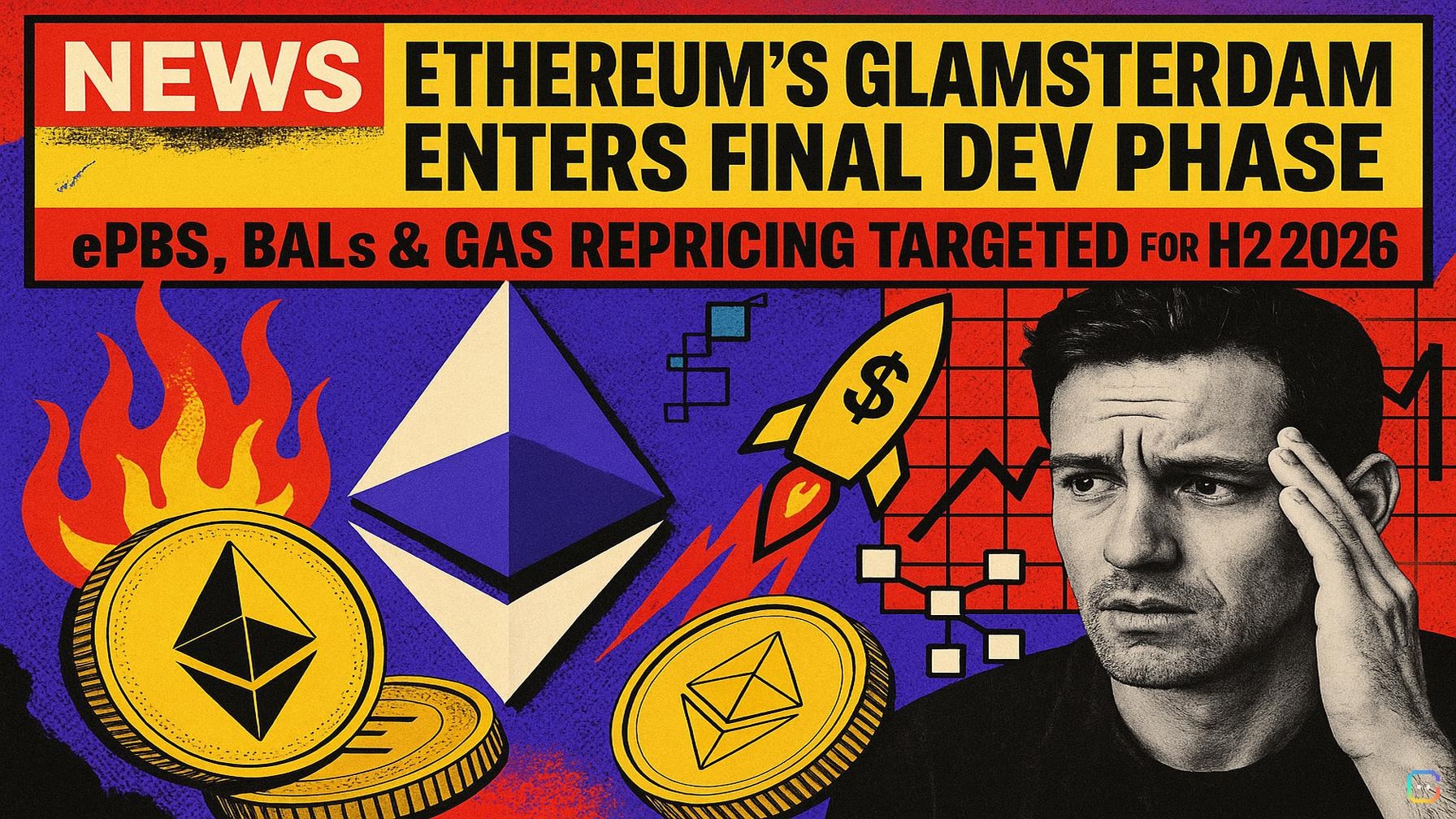
Ethereum's Glamsterdam Enters Final Dev Phase — ePBS, BALs & Gas Repricing Targeted for H2 2026
Ethereum developers have pushed the Glamsterdam upgrade into its final development phase, shifting Layer 1 scaling and block-production changes back into the spotlight. Private developer networks are now running the full package of planned Ethereum Improvement Proposals (EIPs) for the fork, allowing client teams to exercise the complete upgrade before public testnets go live. According to Ethereum Foundation developer Parithosh Jayanthi, teams have “all the EIPs in them right now,” and while there’s “no fixed timeline,” he says developers have made “massive progress.” The upgrade is still expected in the second half of 2026, but the final date will depend on testnet outcomes and client readiness. What Glamsterdam brings - Enshrined Proposer-Builder Separation (ePBS, EIP-7732): This moves the split between block builders and proposers into the protocol itself. By enshrining that separation, Ethereum aims to reduce reliance on off-chain relays, increase transparency in block construction, and mitigate some MEV (maximal extractable value) risks that arise from opaque transaction ordering. - Block-Level Access Lists (BALs, EIP-7928): BALs let a block declare in advance which accounts and contract storage it will access. That visibility helps nodes pre-load required data and enables safer parallel execution when transactions touch different state, improving block processing efficiency. - Gas repricing: The upgrade will reweight fees so “high-level compute gets cheaper and state gets more expensive,” per Jayanthi. The idea is to align gas costs with the actual resources operations consume — a change that could reshape smart-contract design, especially for state-heavy apps. Where this sits in Ethereum’s roadmap Glamsterdam comes after earlier 2026 upgrades such as Pectra and Fusaka, which focused on validator performance, data capacity, and scaling primitives (Fusaka’s testnet work centered on PeerDAS and blob capacity). Glamsterdam shifts the roadmap deeper into Layer 1 execution and block production, and combines consensus-layer and execution-layer changes. The name itself blends Gloas and Amsterdam. What it means for users and operators - Regular ETH holders: No action required; wallets and balances won’t change. - Validators and node operators: Will need to install updated client software before mainnet activation. - Developers: May need to reconsider contract patterns and storage usage as gas costs change. Why it matters Glamsterdam alters how Ethereum builds blocks, prepares execution data, and prices on-chain work — not just a single tweak but a substantial reworking of core behaviors. Jayanthi called it “probably the largest fork we’ve had since the Merge.” If private devnet testing remains stable, the plan is to move to public testnets, followed by code hardening and then a finalized mainnet schedule. Developers and node operators should watch the upcoming public testnets and client releases closely; those steps will determine the final timeline and when the network-wide upgrade will land. Read more AI-generated news on: undefined/news

Illinois Passes First U.S. Crypto Transaction Tax — 0.2% Broker Levy Sparks Industry Outcry
Illinois just became the first U.S. state to impose a broad, transaction-level tax on digital-asset activity — and the crypto industry is warning of serious consequences. What passed - Governor JB Pritzker has signed Illinois’ $55.9 billion budget, which includes the Digital Asset Tax Act. The law levies a 0.2% tax on digital-asset business activity tied to brokers’ services — including exchange, transfer, custody and wallet operations. - The tax takes effect Jan. 1, 2027. Brokers must register with the Illinois Department of Revenue before engaging in covered activity; registration lasts one year and auto-renews unless canceled or revoked. - State budget paperwork estimated roughly $60 million in revenue from the measure. The tax was advanced through the budget process after lawmakers approved Senate Bill 3019. Who is affected - The rule applies to firms operating in Illinois and, under broad sourcing rules, to out-of-state brokers that generate at least $100,000 in annual receipts from Illinois customers. - A transaction can be sourced to Illinois based on customer location, account records, mailing address, IP address or other data suggesting Illinois is the primary place of use. - Brokers must collect the tax as a separate line item, keep detailed records and file monthly reports covering the prior month’s activity. BDO USA notes customers are legally liable for the tax to their provider. Industry pushback - Industry groups mounted strong opposition before the signature. The Crypto Council for Innovation urged a line-item veto, warning the levy would “drive innovation and builders out of the state.” The council likened the logic behind the tax to “taxing correspondence because it is delivered by email rather than by post.” - The Digital Chamber and the Illinois Blockchain Association criticized lawmakers for giving the industry “zero advance notice.” - a16z Crypto policy lead Miles Jennings argued there is “no comparable state financial transaction tax” on stocks, bonds or derivatives, calling Illinois’ approach among the most punitive in the country. Compliance implications - With the law now signed, the question is no longer theoretical: brokers with Illinois users must audit user records, billing systems and activity types, set up collection processes and register with the state well before Jan. 1, 2027. - Earlier versions of the budget included criminal penalties for unregistered brokers after the start date; the final enactment has moved the matter to an imminent compliance deadline. How this fits into the wider picture - The Illinois tax stands out from federal tax discussions currently happening in Congress. While lawmakers at the federal level are reviewing proposals addressing crypto income sources — stablecoin payments, staking rewards, mining income, DeFi lending, wash-sale rules and disclosure programs — Illinois’ law taxes covered digital-asset activity itself, not income or gains. That structural difference is a core part of the industry’s objection. Bottom line Illinois has set a new precedent by taxing digital-asset transactions at the point of business activity rather than as taxable income. The move will force exchanges, custodians and wallet providers to reassess operations and compliance for Illinois users — and it could shape how other states think about taxing crypto going forward. Read more AI-generated news on: undefined/news
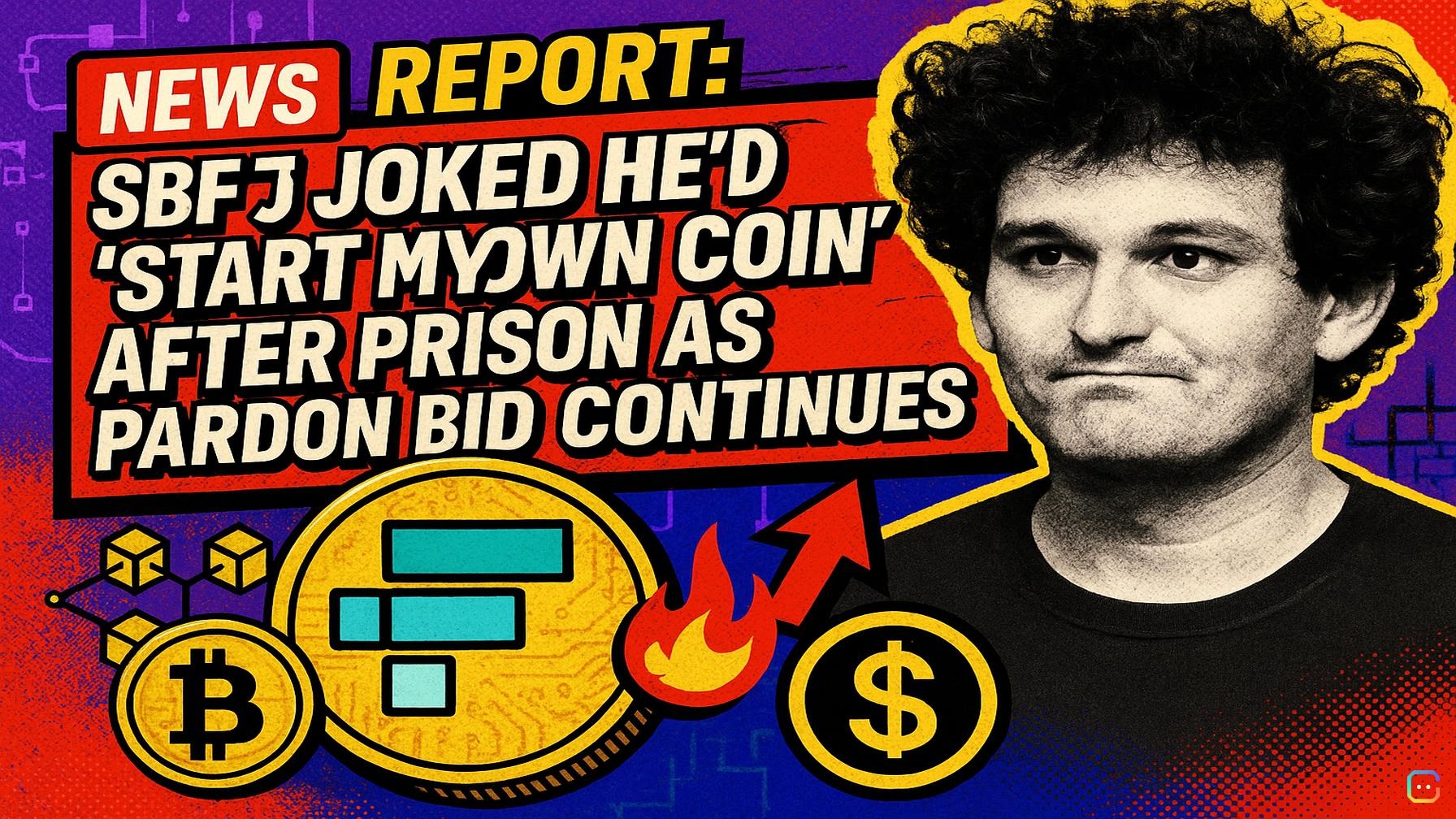
Report: SBF Joked He'd 'Start My Own Coin' After Prison as Pardon Bid Continues
Sam Bankman‑Fried has reportedly joked about launching a new cryptocurrency after he leaves prison — a remark that landed back in the spotlight as the FTX founder continues to fight for freedom through legal and political channels. New York Magazine recounts a conversation between Bankman‑Fried and fellow inmate David Bunevacz at the federal prison in Lompoc, California, where Bankman‑Fried is serving a 25‑year sentence following his 2023 fraud and conspiracy conviction. When Bunevacz asked what he’d do if released, Bankman‑Fried allegedly said a serious business would need $50–100 million to start and added, “I’ll start my own coin.” Bunevacz later told the magazine the comment may have been in jest and that people likely wouldn’t rush to buy it — but with FTX’s collapse still one of crypto’s most high‑profile scandals, the quip drew attention. The report offers a broader snapshot of Bankman‑Fried’s current situation. He has formally filed a presidential pardon request with the Trump administration — a move New York Magazine says was submitted on June 8 — and betting markets such as Polymarket briefly increased the odds of a pre‑2027 pardon to roughly 14% after the filing. (Trump has previously told The New York Times he did not plan to pardon him.) Legally, Bankman‑Fried’s options have narrowed. A three‑judge U.S. appeals panel recently upheld his conviction and 25‑year sentence, rejecting his claim that key evidence was wrongly excluded at trial. He still might seek further review, but with the appeals setback and a withdrawn Rule 33 motion in April (while preserving a request for a different judge), clemency remains among his clearest remaining avenues. Inside prison, the profile describes Bankman‑Fried’s routine: he takes medication for clinical depression and ADHD, follows a vegan diet, and has been writing a serialized memoir titled Manfred. He continues to publicly maintain his innocence; prosecutors argued at trial that he diverted billions in customer funds from FTX to Alameda Research, leading to convictions on seven criminal counts. Bankman‑Fried has also tried to stay involved in policy conversations from custody. In February he drew criticism from senators after praising the CLARITY Act and crediting former President Trump — comments lawmakers said they did not want his input on. Meanwhile, the fallout from FTX’s collapse persists outside the courtroom. Bankruptcy and civil proceedings continue, with former customers tracking creditor repayments and multiple legal claims tied to the exchange and its advisers still active. For now, the “start my own coin” comment is a reported prison exchange rather than a formal business plan. Any actual return to crypto would hinge on whether Bankman‑Fried’s legal fortunes change — through appeal, clemency, or other adjustments to his sentence. Read more AI-generated news on: undefined/news
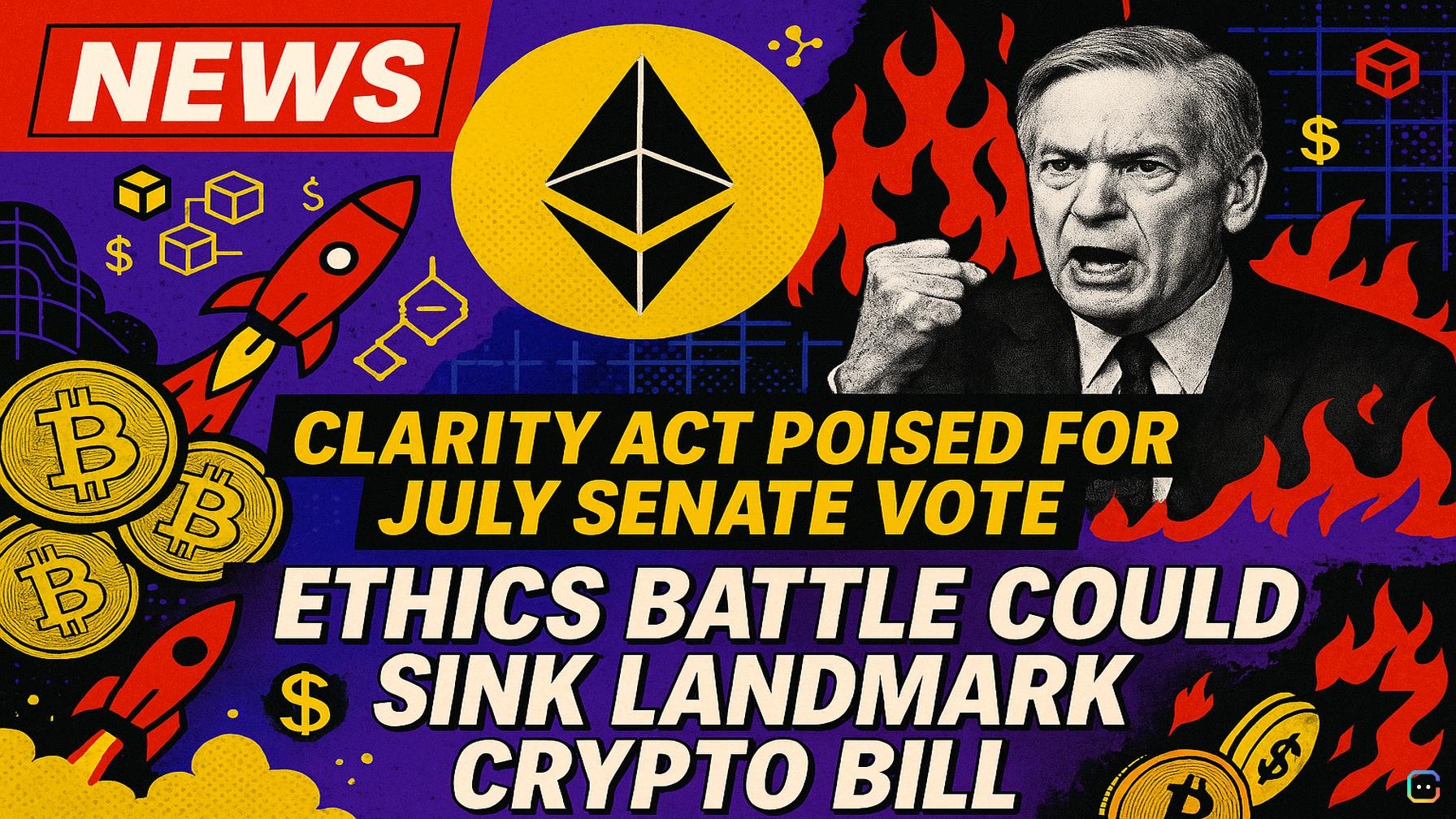
CLARITY Act Poised for July Senate Vote — Ethics Battle Could Sink Landmark Crypto Bill
The CLARITY Act — officially titled the Digital Asset Market Clarity Act — is edging toward a potential Senate floor vote in July, but a last-minute ethics battle could determine whether it sails through this congressional session. David Nage, managing director and portfolio manager at Arca, told crypto insiders he left recent meetings with Senate offices convinced that the core market-structure work is largely done. In a new report he estimated industry and policymakers are about “80–85%” aligned on the bill’s substance, despite public disagreements that have grabbed headlines. The bill already has bipartisan committee support and several procedural steps remain. Nage says the big policy fights — including stablecoin yield rules — appear mostly resolved. Even with continued pushback from parts of the banking sector (notably JPMorgan CEO Jamie Dimon), many Senate staffers view the stablecoin debate as settled. The remaining flashpoint is ethics: rules that would prevent government officials from profiting from crypto-related business activities while in office. Lawmakers are less split on whether such limits should exist and more focused on enforcement and optics. Nage describes the impasse as a political and implementation problem rather than a policy disagreement over digital assets. To break the logjam, Nage proposes a uniform ban on crypto business activity for the President, Vice President, executive-branch officials and members of Congress — with no carve-outs. His base case assumes ethics language is hammered out and competing Senate proposals are reconciled in the coming weeks, putting the bill on the floor after Congress returns from recess on July 13. If ethics provisions aren’t resolved before recess, he warns the window to pass the bill this session could shrink dramatically — a point Senator Cynthia Lummis has echoed, saying failure now might push meaningful action until 2030. Supporters point to several enforcement and consumer-protection measures in the CLARITY Act. Lummis has said the bill would direct $150 million to law enforcement for crypto fraud and related investigations. It would also allow exchanges and stablecoin issuers to temporarily freeze suspicious transactions for up to 30 days, with extensions possible up to 180 days through written orders. Digital-asset firms would be brought under Bank Secrecy Act requirements, including AML programs and Suspicious Activity Report obligations similar to those for traditional financial institutions — measures proponents say will help trace illicit funds and protect consumers. Industry groups are also lobbying to preserve language from the Blockchain Regulatory Certainty Act. Kristin Smith, president of the Solana Institute, says that wording would clarify that blockchain developers, node operators and validators who do not custody customer assets should not be treated as money transmitters under U.S. law. Preserving that distinction, advocates argue, is critical to providing legal certainty for open-source developers and network operators while keeping enforcement targeted at firms that actually control customer funds. With key stakeholders largely aligned on policy but sharply divided on how to police conflicts of interest, the CLARITY Act’s fate now hinges on a political compromise over ethics. If senators can bridge that gap quickly, the bill could reach the Senate floor in mid-July; if not, supporters warn, the opportunity to pass comprehensive crypto legislation this Congress may evaporate. Read more AI-generated news on: undefined/news
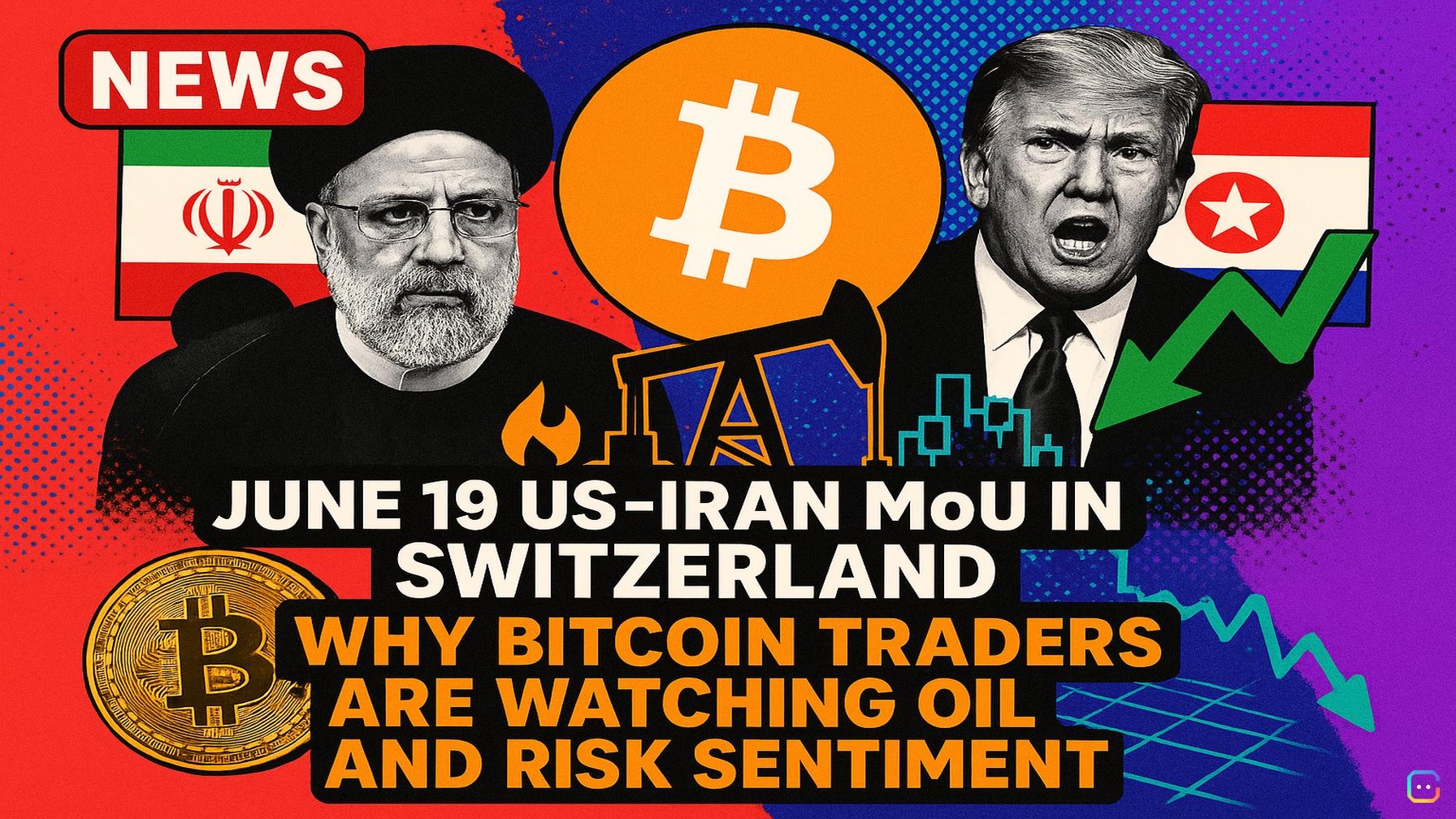
June 19 US‑Iran MoU in Switzerland: Why Bitcoin Traders Are Watching Oil and Risk Sentiment
A diplomatic development in Switzerland has landed on crypto traders’ radars for June 19, 2026 — not because it’s a Bitcoin event, but because of the macro ripple effects it could trigger. What’s happening - The U.S. and Iran are scheduled to sign a memorandum of understanding at the Bürgenstock resort in Switzerland on June 19. Qatar and Pakistan are listed as mediators and Switzerland is hosting the ceremony. - The MoU reportedly targets military operations, sanctions, and steps to reopen the Strait of Hormuz — a key chokepoint for global energy flows. Why Bitcoin traders care This isn’t about blockchain or on-chain metrics. It matters because Bitcoin frequently behaves like a high‑beta macro asset: geopolitical developments that shift oil prices, inflation expectations, central-bank paths, or broad risk appetite can move BTC prices indirectly. If the signing meaningfully reduces Middle East tensions, oil-market stress could ease, inflation fears may cool, and risk assets (including Bitcoin) could see support. Conversely, stalled talks or disappointing terms could leave markets unchanged or worse. How the market will likely react - The first signals will probably show up in oil, the dollar, and equity futures rather than in crypto order books. Falling energy prices and a risk‑on move in equities tend to be favorable for Bitcoin; continued oil-price pressure or renewed uncertainty tends to be negative. - This is the same category of macro headline as inflation prints, central-bank decisions, or war‑risk news: it moves BTC via liquidity and sentiment, not protocol fundamentals. What traders should watch next - Official confirmations from primary sources about the MoU’s terms and any implementation steps. - Immediate market reactions across oil, FX (USD strength/weakness), and equity futures to see whether risk appetite shifts. - Whether the initial market move holds or fades — temporary relief often does not translate into lasting flows into speculative assets. - Any follow‑through in sanctions, shipping activity through the Strait of Hormuz, or regulatory and liquidity implications that could alter institutional risk calculations. Takeaway June 19 deserves a spot on macro calendars for crypto traders, but it should be treated as one potential influence among many — useful context for positioning, not a standalone Bitcoin catalyst. This article was written by the News Desk and edited by Samuel Rae. Read more AI-generated news on: undefined/news
Hackers Drain $2.19M From Deprecated Aztec Connect Contract, Spotlighting Legacy DeFi Risk
Hackers have drained roughly $2.19 million from a deprecated Aztec Connect smart contract, underscoring a persistent and often-overlooked DeFi hazard: old, on‑chain contracts can remain dangerous long after a project shuts down. According to a SlowMist analysis, the exploited code belonged to an older Aztec Connect component — not the current Aztec network. That distinction matters: this incident is a lesson about legacy infrastructure risk, not evidence that Aztec’s active systems were compromised. Why this is worrying - DeFi’s promise of immutability — code that can’t be arbitrarily changed — gives users predictability, but it also creates a long tail of latent risk. If a retired contract contains a vulnerability and cannot be paused or patched, that weakness can sit unnoticed for years until an attacker finds it. - When projects wind down, front ends disappear and teams move on, but smart contracts remain on-chain. Any funds left inside deprecated contracts continue to present an attractive target for attackers who don’t care whether a protocol is still trendy or maintained. Practical takeaways - Users: don’t assume “shutdown” means safe. If a protocol announces deprecation or migration, review and withdraw any remaining deposits, approvals, or positions in legacy contracts. Periodically check older wallets and approvals to reduce exposure. - Projects: build clearer shutdown playbooks. That should include explicit user warnings, well-publicised withdrawal windows, active monitoring of residual on‑chain balances, and transparent communication about what remains live on-chain. - Security teams: include legacy systems in threat models. Even low‑profile contracts can be worth attacking if funds remain. Most coverage of exploits focuses on live protocols with active liquidity — understandably. But the Aztec Connect incident shows the attack surface is broader: every DeFi cycle leaves behind abandoned pools, paused vaults, and deprecated bridges that can be reclaimed by opportunistic attackers. The main takeaway is practical, not panic-inducing: this does not imply Aztec’s current network has failed, but it should remind users and builders to take legacy exposure seriously. DeFi security is not just about new code; it’s also about what the industry leaves on-chain. Article by the News Desk. Edited by Samuel Rae. Read more AI-generated news on: undefined/news