Today's Cryptocurrency Prices by Market Caps
The global cryptocurrency market cap today i $2.35T
Market Cap
$2.35T
24h Trading Volume
$141.09B
BTC Dominance
56.47%
|
#
|
Name
|
Price
|
1h %
|
24h %
|
7d %
|
Market Cap
|
Volume (24h)
|
Chart (7d) |
|---|---|---|---|---|---|---|---|---|
|
|
—
|
|||||||
|
No cryptocurrencies found Try adjusting your search query |
||||||||
Latest Crypto News
View All News
Ripple Doubles Down on AI as XRPL Enables Agent Payments in XRP and RLUSD
Ripple doubles down on AI as XRPL adds agent payments using XRP and Ripple USD Ripple is leaning into generative AI and machine-to-machine payments as the XRP Ledger (XRPL) gains native support for AI agent payments using XRP and Ripple USD (RLUSD). The move follows the launch of an XRPL AI Starter Kit — a developer-focused toolkit designed to let autonomous agents initiate, receive and manage on‑chain payments. What’s new: AI agents can now pay, settle and transact - The XRPL AI Starter Kit enables developer workflows where AI agents handle payments with limited human intervention. It supports x402-powered payments using both XRP and RLUSD. - Early use cases highlighted by Ripple include agents paying for cloud compute, settling invoices and completing transactions automatically. - The kit bundles tools such as access to XRPL Docs MCP Server and Claude-powered utilities for wallet creation, balance checks, transaction tracking and sending payments — aimed at builders testing agent-based financial flows. How x402 works - The x402 payment standard lets software request payment inside a web request: a service asks for payment, an agent sends funds on-chain, and the service proceeds after receiving proof of payment. This pattern is central to machine-speed commerce and API monetization. Why XRPL? - Ripple argues XRPL is well suited to automated payments because of fast settlement (3–5 seconds), predictable fees, a built-in decentralized exchange and native support for cross-currency flows via its exchange layer. - XRP functions as the native network asset, while RLUSD provides a dollar-pegged option for agents seeking lower price volatility. Ripple hires for GenAI work - Coinciding with the Starter Kit rollout, Ripple is recruiting a Staff Software Engineer, GenAI Platform, based in San Francisco. The role focuses on agentic AI systems — runtimes, orchestration, memory systems, evaluation pipelines, security controls and developer tooling — and signals investment in production-grade agent architectures and deployments. - Ripple has not said the hiring is directly tied to the Starter Kit, but the timing underscores a broader company push into GenAI capabilities alongside external developer tooling. Market context and competition - USDC currently dominates x402 activity, with more than 120 million cumulative transactions and over $41 million in settled volume, so Ripple is entering a space where other payment flows already have momentum. - Early tooling does not guarantee adoption; XRPL will need real, compelling apps and developer buy-in to translate these capabilities into sustained network demand. Broader strategy and industry ties - Ripple’s AI-payment efforts sit alongside its broader work on stablecoins and cross-border settlement. The company is named as a partner in Mastercard’s Agent Pay for Machines program, one of more than 30 participants, reflecting growing industry interest in machine-speed payments. What it means for XRP holders - AI agent payments are a potentially new use case for XRPL, but any impact on XRP’s price or network activity will depend on liquidity, regulatory factors, developer adoption and wider crypto market conditions. The Starter Kit and GenAI hires set the stage — whether they create significant demand will be decided by real-world applications. Read more AI-generated news on: undefined/news
MSUSD depegs after proof‑of‑reserves feed cut; MainStreet says reserves intact
MainStreet’s MSUSD plunged after verification feed pulled, protocol insists reserves intact MainStreet Finance’s MSUSD stablecoin traded far below its $1 peg on Tuesday after a rapid sell-off triggered by the sudden loss of a public proof-of-reserves feed. At the time of writing MSUSD was changing hands around $0.3781, swinging between $0.065 and $0.9995 over 24 hours as liquidity and confidence were tested. What happened - Verification provider Accountable abruptly terminated its service agreement with MainStreet, saying the protocol was “unable to meet our verification standards.” Accountable warned markets that relied on its feed and said it was working with partners as the situation evolved. - MainStreet countered that the issue resulted from the shutdown of a third‑party proof‑of‑reserves dashboard and insisted “Mainstreet remains fully backed.” The protocol added the dashboard outage “does not reflect any loss of assets or deterioration in portfolio quality.” Market fallout - PeckShield reported the MainStreet‑related token dropped as much as 85% from its prior levels. CoinGecko later showed a partial rebound and listed MSUSD with a market cap of roughly $27.06 million and about $8.25 million in 24‑hour trading volume. The token’s wide daily range highlighted unstable trading as holders probed liquidity and redemption pathways. - The shockwaves reached lending markets. PeckShield said Morpho’s msY/USDC market hit 100% utilization — meaning available lending liquidity was fully used — a condition that can make withdrawals difficult and push borrowing rates higher. - AlphaUSDC Delta V2, curated by AlphaPING, reportedly held about 30% exposure to the affected market, roughly $18 million, underscoring how stress in a single yield‑linked position can ripple through lenders, vault depositors and borrowers. Why this matters A stablecoin depeg that begins as a verification problem can quickly morph into a broader DeFi liquidity event. Full utilization in lending markets means users may have to wait for repayments or fresh deposits before liquidity normalizes, and related yield products can amplify losses across composable positions. MainStreet’s response MainStreet says it has deployed more than $8 million in USDC to support liquidity and is actively seeking alternative proof‑of‑reserves providers. Those measures aim to shore up confidence, but the competing public claims from Accountable and MainStreet have left users with uncertainty over the token’s backing and the robustness of its transparency mechanisms. Broader context The incident underscores an ongoing debate about yield‑bearing stablecoins and the limits of third‑party verification tools. It echoes previous episodes — such as the Resolv Labs USR depeg — where peg losses propagated across interconnected DeFi protocols, highlighting the systemic risks of composability. What to watch next MSUSD’s recovery will hinge on MainStreet restoring a credible proof‑of‑reserves solution, maintaining liquidity support, and rebuilding market trust. Traders and protocol users will be watching the peg, Morpho utilization metrics, any new verification partners, and whether deployed liquidity narrows the gap back toward the intended $1 price. Read more AI-generated news on: undefined/news

Bitcoin price is down over 40% since STRC launched: Is Strategy 'fine'?
STRC’s slide below par has emboldened critics, slowed Strategy’s Bitcoin buys and sparked debate over whether Michael Saylor’s BTC flywheel is still fine.
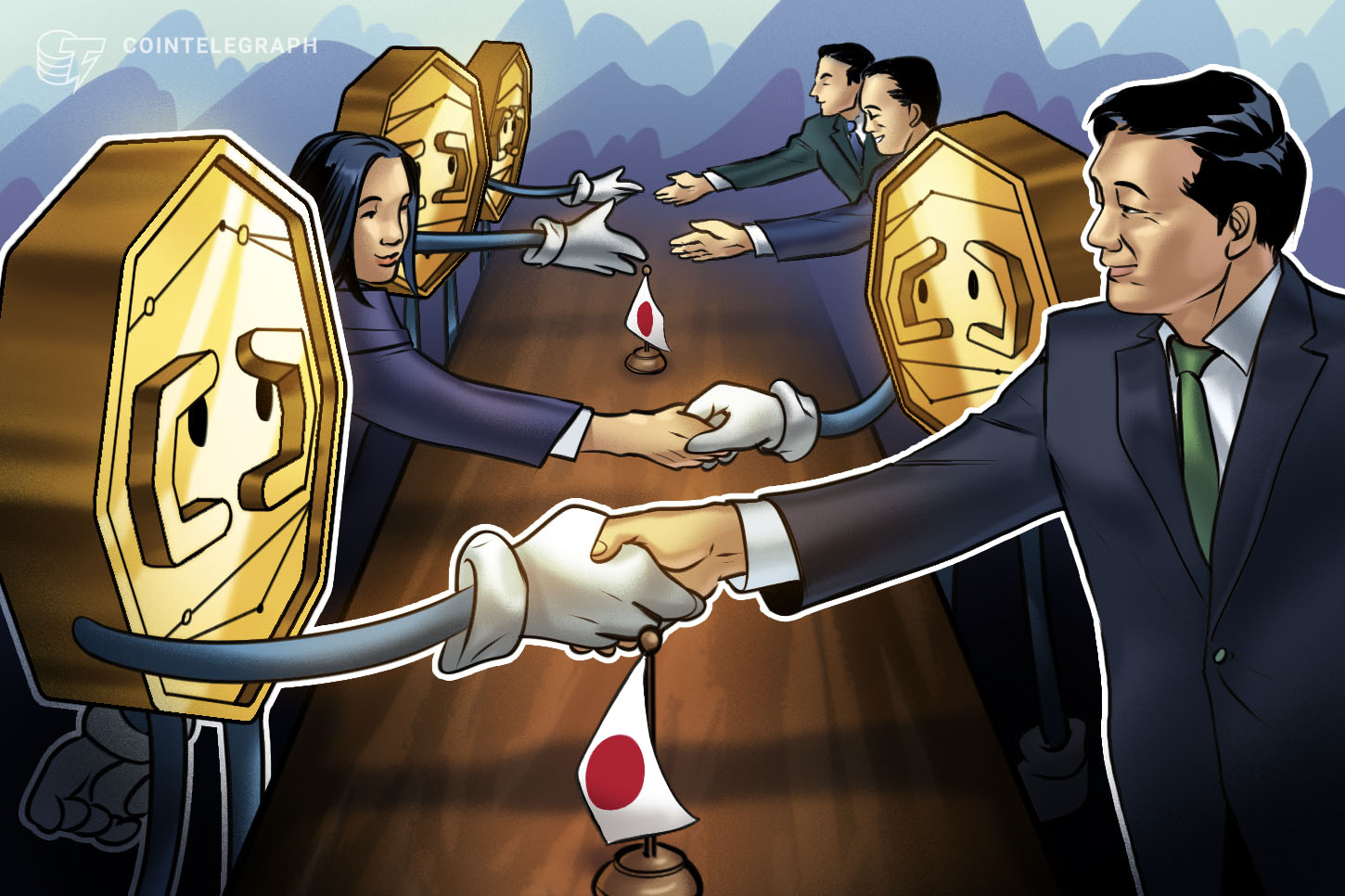
Japanese corporate pension fund plans 1% crypto allocation: Nikkei
A Japanese corporate pension fund with about 1,200 participating small and medium-sized businesses plans to allocate roughly 1% of its assets to crypto.

Ethereum's biggest 'sandwich' bot drained of $7.5 million in ironic exploit
Blockaid said an attacker tricked Jaredfromsubway.eth into approving fake trading routes, then used those approvals to drain WETH, USDC and USDT.
Venus Adds Tokenized Stocks as Collateral on BNB Chain, Accelerating RWA Push
Venus Protocol has added tokenized stocks as eligible collateral for borrowing on BNB Chain, pushing a familiar real-world asset play deeper into DeFi lending. Why it matters - This move lets users pledge tokenized equity exposure to borrow on-chain assets like stablecoins or BNB without selling their underlying positions — effectively bringing a traditional margin-finance mechanic into DeFi. - Real-world assets (RWAs) are one of the strongest narratives in DeFi right now, and tokenized equities give users a straightforward, equity-flavored bridge from traditional markets into on-chain liquidity. What BNB Chain is trying to do - Chains are competing to attract RWA activity because tokenized stocks, treasuries and other off-chain assets tend to bring more stable and less purely speculative liquidity. Venus’s integration signals BNB Chain’s bid to capture that flow. Risks to watch - Tokenized stocks carry a different risk stack than native crypto. On-chain tokens may represent off-chain securities held by custodians, and their value and redeemability depend on legal structures, custody arrangements and redemption processes — not just smart contracts. - Valuation and market hours are a challenge: equities trade during traditional market sessions while DeFi markets run 24/7. Protocols need robust price feeds, sensible liquidation thresholds and systems to handle gaps between markets or after-hours moves. Market context and investor takeaways - This isn’t an automatic buy or sell signal. It’s part of broader trends shaping crypto: increased compliance scrutiny, simpler app-based access, renewed DeFi funding, growth in tokenized RWAs, and altcoin behavior still largely tied to Bitcoin’s direction. - The real test will be whether liquidity and operational resilience follow the headlines. Tokenized equities can broaden DeFi’s addressable market — but only if custody is reliable, oracles are strong, and rules for freezes, redemptions and liquidations are clear. Bottom line Venus’s integration is a logical next step for DeFi lending, making on-chain borrowing more familiar for users with traditional equity exposure. But practical success hinges on backend infrastructure and how protocols handle the off-chain elements that underpin tokenized stocks. Source: Venus’s X account. Reported by the News Desk; edited by Samuel Rae. Read more AI-generated news on: undefined/news