Headline: XRPL Proposes New Defenses as DeFi Growth Brings Flash Loan Risk into Focus
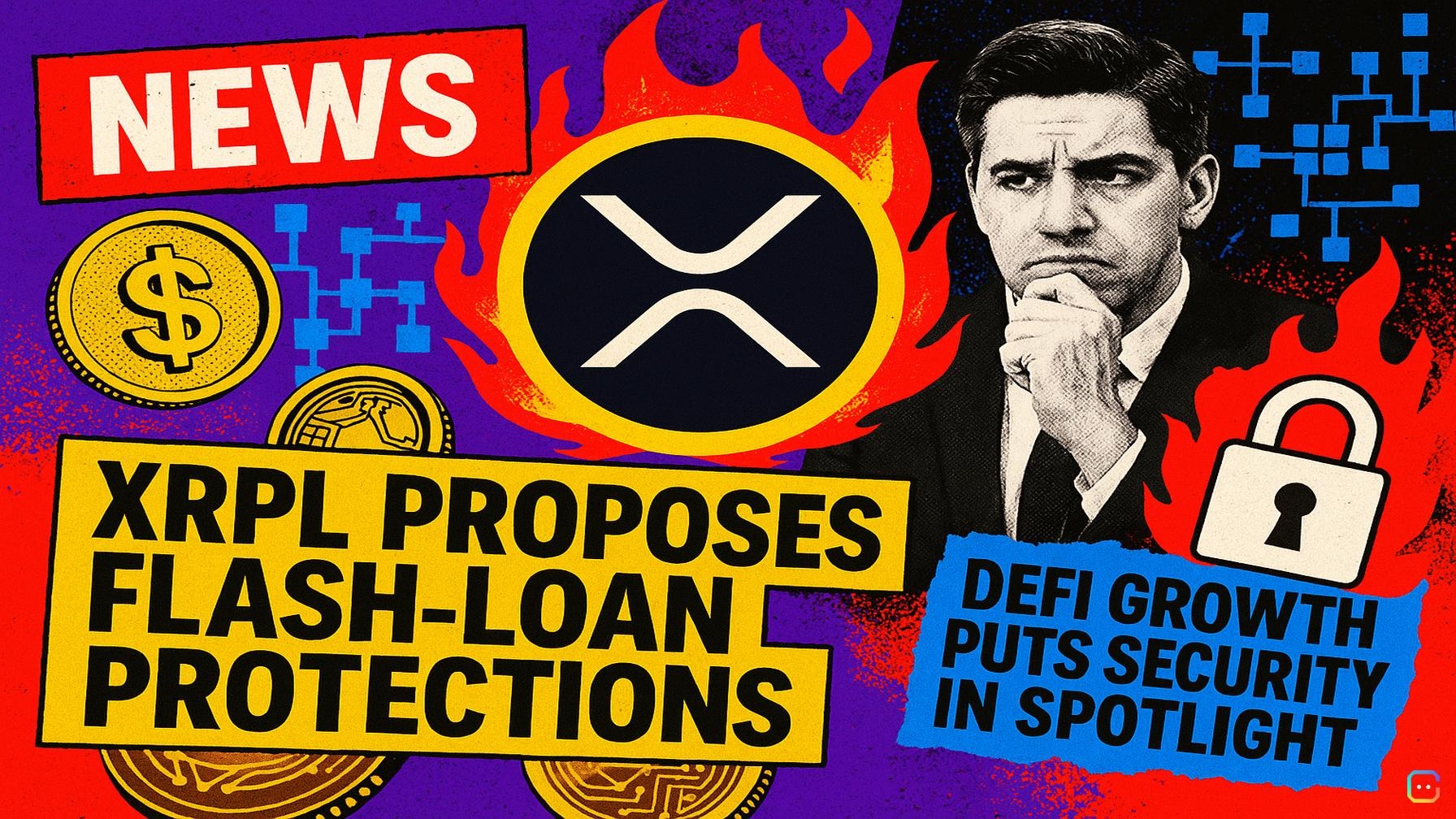
As decentralized finance activity accelerates on the XRP Ledger, a proposed XRPL upgrade targeting flash loan exploits is drawing fresh attention to the network’s security posture. The change — revealed by crypto analyst CryptoSensei on X — aims to make a class of attacks that has already cost DeFi protocols hundreds of millions of dollars far harder to execute.
What’s being targeted and why it matters
Flash loans let actors borrow large sums within a single transaction to manipulate prices or drain liquidity pools. They’ve become one of DeFi’s most persistent and costly vulnerabilities. The XRPL proposal introduces safeguards intended to reduce the attack surface for such maneuvers, strengthening the protections around liquidity pools and lending primitives.
That matters because DeFi’s expansion on XRPL isn’t just a technical milestone — it’s an invitation for developers, users, and institutions to deploy capital. As CryptoSensei notes, every new feature opens new opportunities but also new attack vectors; building DeFi that can scale securely is a different challenge than merely building DeFi.
XRPL’s resilience beyond flash loans
Security patches are only one part of the story. The XRP Ledger has been designed to maintain operation under extreme pressure, and that resilience is increasingly relevant as the platform pursues larger, institutional-grade use cases.
Former Ripple CTO David Schwartz has outlined several architecture choices that help XRPL withstand even state-level threats to its validator network. Key defenses include:
- Support for validators to run anonymously over privacy-preserving networks such as Tor and 12P.
- Mechanisms allowing reserve operators to replace targeted or compromised nodes quickly.
- A Negative Unique Node List (UNL) system intended to preserve consensus during periods of disruption.
Analyst Chloe points out that while many networks talk decentralization, XRPL’s design emphasizes survivability under censorship, coordinated attacks, and hostile environments — properties that banks, governments, and other institutions demand for mission-critical financial infrastructure.
What to watch next
The flash-loan mitigations signal a maturing approach to DeFi security on XRPL: not just enabling new financial primitives but hardening them. If adopted, the proposal could help reassure developers and larger capital allocators that the Ledger is taking concrete steps to limit high-impact exploits. Expect additional proposals and security-focused upgrades as DeFi usage on XRPL grows and attracts more sophisticated stakeholders.
Read more AI-generated news on: undefined/news