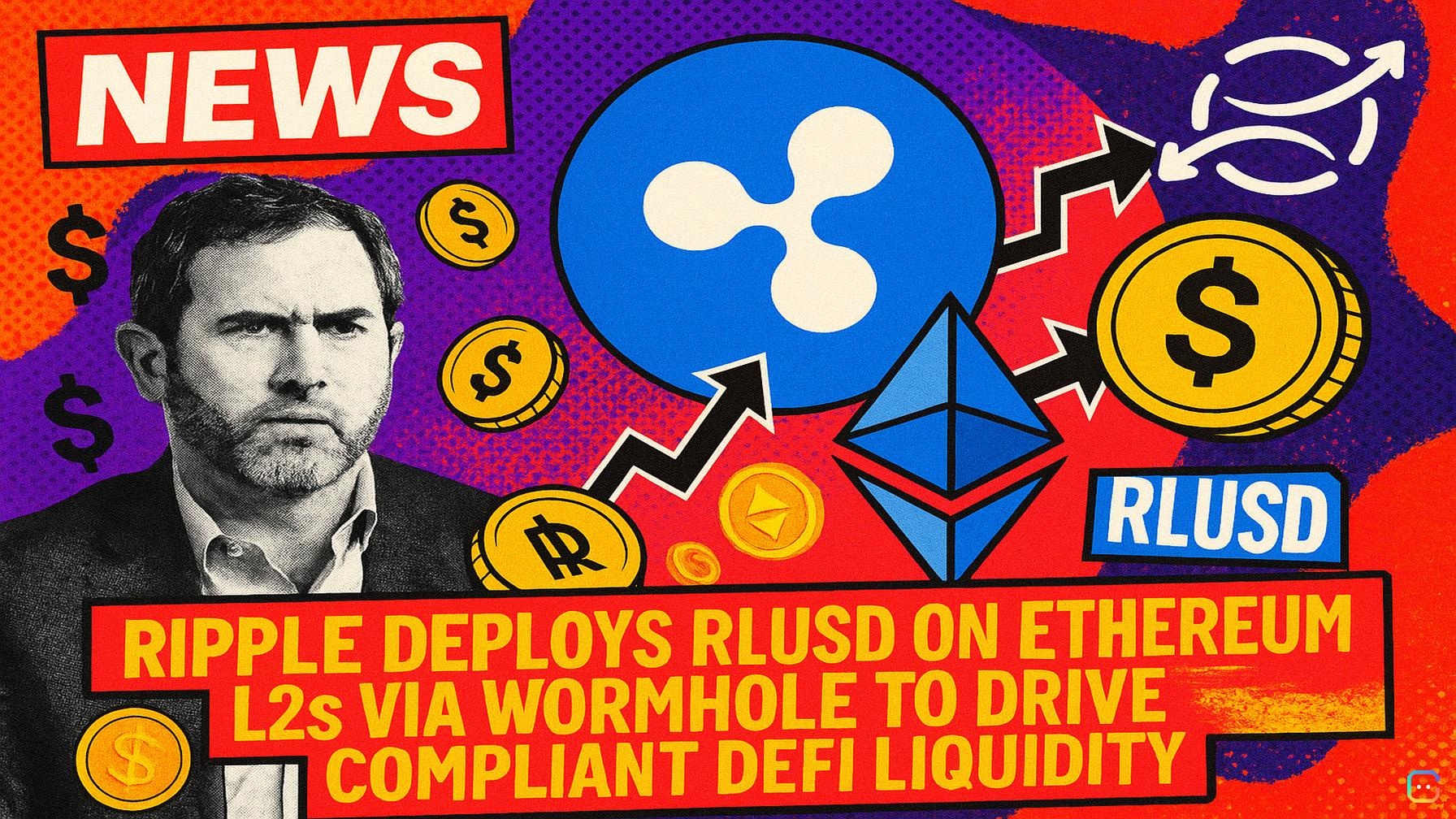
Ripple is pushing RLUSD — its fast-growing, US trust-regulated stablecoin — onto Ethereum layer-2s as part of a broader multichain play designed to boost liquidity, speed and institutional utility across blockchains.
What’s happening
- Ripple announced a partnership with Wormhole to test RLUSD on several major L2 networks, including Optimism, Base, Ink and Unichain. The integration will use Wormhole’s Native Token Transfers (NTT) standard to move liquidity efficiently between chains while keeping RLUSD “native” under Ripple’s control.
- RLUSD already exists on the XRP Ledger and Ethereum; this expansion targets Ethereum’s L2 ecosystem to reduce costs and improve DeFi composability.
Why it matters
- L2 networks bring lower fees and higher throughput than Ethereum mainnet, making them attractive for DeFi activity and institutional flows. By putting a US-regulated stablecoin like RLUSD on these chains, Ripple aims to make compliance-friendly liquidity more readily available where traders and dApps are operating.
- Jack McDonald, Ripple’s SVP of Stablecoin, framed stablecoins as “the gateway to DeFi and institutional adoption,” adding that RLUSD is built to be “the trusted, liquid medium” for users to access the digital-asset economy. Ripple says launching RLUSD on these L2s pairs on-chain efficiency with regulatory compliance.
Growth and positioning
- RLUSD has scaled quickly: CoinGecko data show a market cap of about $1.3 billion in under a year, making it the third-largest US-regulated dollar token behind Circle’s USDC and PayPal’s PYUSD. Ripple also noted RLUSD’s circulating supply jumped 28% in November, surpassing $1 billion.
- The project is being positioned to comply with the proposed GENIUS Act, and Ripple plans further chain deployments subject to regulatory approvals.
Institutional pilots and real-world use
- In November, Ripple launched a pilot with Mastercard, WebBank and Gemini to settle credit-card transactions using RLUSD on the XRP Ledger. Under the program, WebBank can send RLUSD over XRPL for instant settlement of daily obligations with Mastercard, cutting out the delays of traditional ACH transfers.
- Ripple president Monica Long called the pilot a “meaningful step” toward showing how regulated digital assets can speed up institutional payment processes.
Market context
- XRP — the token most associated with Ripple — was trading around $1.90 at the time of reporting, down about 5% over 24 hours amid a broader crypto market correction affecting Bitcoin and leading altcoins.
Bottom line
Ripple’s Wormhole collaboration signals a clear push to make a regulated, native stablecoin available where DeFi and institutional activity are growing: L2s. If tests go well and regulators sign off on more deployments, RLUSD’s presence across multiple chains could accelerate cross-chain liquidity and use cases for compliant dollar-pegged tokens.
Read more AI-generated news on: undefined/news